Friday September 18th, 2026
How to Choose the Right Environmental Monitoring Program Based on Facility Activity
What is an environmental monitoring program? It is a written plan stating...


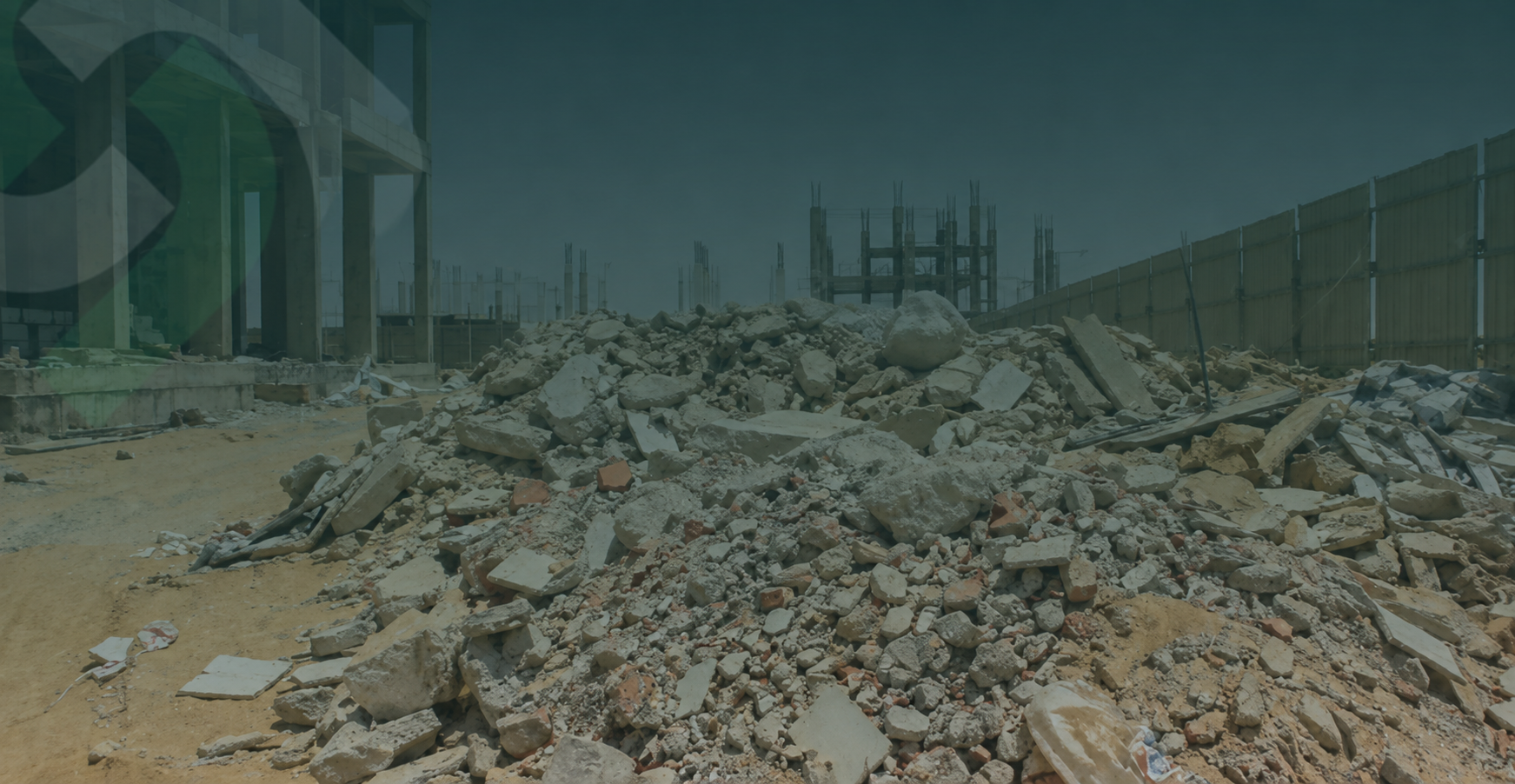
A waste photo documentation guide for sites in Kuwait helps site managers and quality and environmental personnel transform scattered waste photographs and incomplete complaints into a monitoring record that clearly identifies where the issue occurred, when it occurred, the type of waste involved, the responsible party, and the action taken to close the observation.
A single photograph is not enough to prove that a problem has been resolved. Effective documentation requires a clear photograph before the action, information describing the condition, a specific assignment, and then an after-action photograph taken from an angle similar to the original one. In this way, site photographs become part of environmental inspection, daily supervision, and decision-making rather than turning into an album that is difficult to review later.
The importance of documenting waste photographs lies in the ability to show the actual condition on site and link it to a traceable action. Organized photographs help identify repeated waste accumulation, compare conditions before and after corrective action, monitor compliance by work teams and contractors, and improve the accuracy of environmental inspection reports.
However, a photograph alone is not a complete monitoring record. The documentation process should include the date the photograph was taken, location, type of waste, description of the problem, priority level, person responsible for the action, and target closure date.
A project may need environmental consultancy when waste photographs repeatedly appear without a root-cause solution, or when it is difficult to determine the causes of accumulation, responsibilities, transportation routes, and disposal arrangements.
Consultancy also becomes important when starting a new project, expanding operations, changing the waste contractor, preparing environmental monitoring reports, or reviewing compliance with relevant requirements.
The quality of environmental consultancy depends on understanding the nature of the activity and its regulatory requirements. Appropriate measures vary according to the sector, project size, location, and waste types. Therefore, the scope of work should be determined after reviewing site details and available information.
A waste photo documentation guide is an organized record that combines photographs taken during inspections and rounds with information that allows each observation to be understood and the resulting action to be monitored.
The guide may take the form of:
The purpose is not to collect the largest possible number of photographs. Instead, it is to retain photographs that answer practical questions:
When a photograph does not answer these questions, its usefulness becomes limited even if it is visually clear.
A supervisor may send a photograph showing accumulated bags or cardboard and write:
“Please take action.”
This message may result in waste being removed, but it does not explain:
Another photograph may be taken several hours later showing a clean location, but without a clear angle or reference number linking it to the original condition. In this case, it becomes difficult to prove that the second photograph represents the same location or the same corrective action.
An organized guide converts photographs into data linked to a specific case, while scattered photographs remain observations that are difficult to analyze or use for performance review.
When Establishing a New Project
Defining photography rules before work begins helps standardize inspection methods between site engineers, environmental and safety personnel, and contractors. Required fields and closure responsibilities can be incorporated into the project’s environmental supervision procedures.
When Expanding an Existing Facility
Expansion may create new work areas, contractors, and waste routes. If documentation continues to rely only on phone messages, cases may become lost between different teams.
When Developing an Industrial Site
Industrial sites need to distinguish between general waste, process waste, containers, contaminated materials, and liquid or hazardous waste according to the nature of the activity. All cases should not simply be described as “waste” without an initial classification.
When Complaints Are Repeated
If photographs repeatedly show issues around loading areas, storage locations, or waste containers, the problem may relate to capacity, the transportation schedule, collection routes, or contractor performance rather than being a one-time housekeeping issue.
When Reviewing Environmental Compliance
Photographic records help demonstrate implementation of environmental measures and follow-up of observations, but they do not replace other records, reports, or documents that may be required depending on the nature of the project and the competent authority.
The Kuwait Environment Public Authority publishes separate executive regulations relating to waste management, waste transportation, environmental management, and engineering and environmental requirements for facilities. This highlights the importance of reviewing requirements relevant to each activity and waste type rather than applying one template to all sites.
When Improving Performance and Sustainability
Organized photographs can be used to identify areas where recyclable waste repeatedly appears or where different materials are being mixed. The facility can then assess the effect of modifying containers, training workers, or changing collection schedules.
Start with a photograph showing the surrounding area, such as a gate, zone number, or recognizable part of the site. This helps establish spatial context and prevents confusion between similar locations.
The second photograph should clearly show the nature of the waste, leakage, overflowing container, or mixing between waste types. Avoid getting close in a way that may expose the photographer to hazards.
Ensure that lighting is adequate, the camera lens is clean, and the image is not blurred. Avoid excessive digital zoom if it is possible to safely move closer.
A small quantity can appear large in a close-up photograph, while a large quantity can appear limited in a distant photograph. Use an angle that allows the actual scale to be understood without moving or rearranging the waste before taking the photograph.
Avoid photographing workers’ faces, vehicle license plates, confidential documents, or sensitive data unless necessary and permitted under the facility’s procedures. Access permissions and photograph retention periods should also be defined.
The photograph may be rotated or compressed for system purposes, but elements should not be removed from the scene or added in a way that changes the meaning of the condition.
If arrows or circles need to be added, retain the original photograph as well.
Each case should be given a number, such as:
WST-KWT-S03-2026-014
The code may represent:
The reference number makes it easier to link the “before” photograph with the “after” photograph, inspection form, and corrective action.
| Field | What Should Be Recorded? | Why Is It Important? |
|---|---|---|
| Case number | Unique reference number | Prevent photographs and cases from being mixed |
| Date and time | Time the condition was identified | Measure response and closure time |
| Project name | Project or facility | Organize records when managing multiple sites |
| Exact location | Building, floor, zone, or internal coordinate | Allow the corrective team to reach the location |
| Source of observation | Daily round, inspection, or complaint | Identify how the issue was discovered |
| Waste type | General, construction, liquid, recyclable, or other | Select the appropriate handling route |
| Condition description | Accumulation, mixing, leakage, overflowing container, or improper storage | Clearly define the problem |
| Potential impact | Obstruction, contamination, odors, dust, or operational risks | Determine priority |
| Priority level | Urgent, high, medium, or low | Define response speed |
| Responsible party | Department, contractor, or assigned individual | Prevent unclear responsibility |
| Required action | Removal, cleaning, isolation, replacement, or cause investigation | Convert the photograph into a task |
| Target date | Required date or time | Monitor delays |
| After-action photograph | Photograph from a similar angle | Visually verify closure |
| Closure review | Name and date of the person who verified closure | Separate implementation from verification |
| Cause of recurrence | Capacity, training, schedule, or weak supervision | Prevent recurrence |
Before-and-after photographs are among the most useful monitoring tools, but they can become misleading when they are not taken in a comparable way.
For a practical comparison:
For example, an “after” photograph may show that the work area has been cleaned, while the bags were moved behind a container or to an undesignated location.
Therefore, verification should cover the waste route, not only the visual appearance of the location.
Case Number: WST-KWT-A02-2026-014
Date: 6 August 2026
Location: Rear loading area – Sector A
Waste Type: Cardboard and packaging materials mixed with general waste
Observation: Materials accumulated outside containers and blocked part of the movement route
Priority: High
Immediate Action: Clear the movement route and transfer materials to an appropriate temporary area
Corrective Action: Provide a dedicated cardboard container and revise the collection schedule
Responsible Party: Cleaning contractor in coordination with Facility Management
Closure Deadline: Within two hours for the immediate condition and 48 hours for the corrective action
Verification: After-action photograph and inspection of the new container during the next round
Potential Cause of Recurrence: Insufficient capacity during delivery days
Closure Status: Closed after verification
This example converts a photograph into a decision and then converts the decision into a measurable action.
Define Who Takes the Photographs
Not every worker needs to photograph everything.
Clear roles may be assigned, such as:
Define Inspection Times
The inspection round may be conducted:
Frequency should be selected according to project size, waste-generation rate, and risk level.
Use a Limited Number of Categories
You can begin with five categories:
Additional categories should only be added when necessary.
Too many categories at the beginning may confuse users and reduce data quality.
Set a Closure Period for Each Priority Level
For example, a facility may adopt internal timeframes such as:
These periods are operational examples and are not universal regulatory requirements. They should be determined according to site risks and approved procedures.
Review Open Cases Daily
The meeting should not focus only on the number of new photographs.
Review:
Difference Between a Photographic Complaint and a Photographic Monitoring Guide
| Photographic Complaint | Photographic Monitoring Guide |
|---|---|
| Photograph and general message | Photograph linked to a case number |
| Unspecified location | Clear and accessible location |
| No classification | Waste type and problem clearly identified |
| No responsible person | Clear person responsible for action |
| No deadline | Target closure date |
| Deleted after cleaning | Before-and-after record retained |
| Focuses on the mistake | Focuses on cause and action |
| Difficult to analyze recurrence | Allows extraction of indicators and trends |
Delayed Problem Resolution
When photographs have no location or assigned responsible party, site teams may spend time searching for the issue or determining who should resolve it.
Increased Operational Risks
Waste accumulation may obstruct movement, occupy work areas, or be located close to equipment, ignition sources, or drainage systems depending on the nature of the site.
Difficulty Demonstrating Compliance
Scattered photographs do not demonstrate that the facility has an organized system for inspection, monitoring, and closure.
They may also be difficult to link to a Waste Management Plan or environmental reports.
Higher Future Corrective Costs
Addressing a cause early may be simpler than dealing with major accumulation, contamination of recyclable materials, or repeated emergency transportation requests.
Weak Contractor Performance Evaluation
Without a unified record, contractor reviews may depend on impressions or the number of complaints instead of indicators such as closure time, recurrence rate, and segregation quality.
Unrecognized Environmental Impacts
Photographs may reveal early indicators such as liquid leakage, lightweight material being dispersed, or different waste streams being mixed.
Ignoring these indicators may allow the problem to increase.
Incomplete Closure of Cases
Waste may simply be removed from the camera’s view without being classified or transferred through the appropriate route.
Therefore, corrective action should be verified rather than simply confirming that the photographed area looks clean.
Photographing the Condition Without Identifying the Location
Work areas, corridors, and containers can look very similar, particularly on large projects.
The zone name or number should be included.
Taking Dozens of Photographs of the Same Condition
Usually, a limited number of photographs showing the context and details is sufficient.
Large numbers of unclassified photographs make review slower.
Using Messaging Groups as the Final Record
Messaging applications may be useful for rapid alerts, but each condition should be transferred to an organized record that retains the responsible person, deadline, and closure status.
Deleting Pre-Corrective-Action Photographs
The original photograph should be retained to understand the original condition, measure improvement, and verify that the problem description has not changed.
Accepting an “After” Photograph Without Verification
The photograph may be old, taken from another angle, or fail to show where the waste was actually transferred.
Closure should be reviewed by a designated person.
Focusing on the Worker Instead of the System
Repeated problems may result from insufficient containers, a weak transportation schedule, or unclear storage areas.
It should not automatically be assumed that the issue is caused by workers.
Failing to Distinguish Between Correction and Corrective Action
Removing a bag from a corridor is an immediate correction.
Identifying why bags are being placed in the corridor and changing the containers, route, or schedule is a corrective action intended to prevent recurrence.
Use the following checklist to prepare project information:
| Project Situation | Appropriate Service | Objective |
|---|---|---|
| New construction project | Field environmental supervision | Monitor activities and waste and prepare periodic reports |
| Site with repeated accumulation photographs | Waste management system review | Identify recurring causes and correct collection routes |
| Large multi-contractor project | Inspection and corrective-action system | Standardize documentation, responsibilities, and closure deadlines |
| Industrial facility | Waste classification and storage review | Select appropriate handling measures according to waste type |
| Existing facility | Environmental audit or review | Assess implementation level and identify monitoring gaps |
| Poor photograph quality | Photography protocol and training | Improve photographs for analysis and verification |
| Leakage or liquid waste incidents | Specialized field assessment | Determine appropriate containment, storage, and handling |
| Insufficient reporting | Environmental monitoring reports | Convert inspections and photographs into findings and recommendations |
| High recurrence rate | Root-cause analysis | Address the system instead of repeating cleaning |
| Project expansion | Environmental management procedure update | Align monitoring with new activities and areas |
The system should not be evaluated according to the number of photographs taken.
More useful indicators include:
These indicators can be presented weekly or monthly according to the size of the site.
Their purpose is to identify priorities rather than increase paperwork.
Experience in the Project Sector
The consultancy team should understand the nature of construction, industrial facilities, or facility management because waste sources and routes differ from one sector to another.
Understanding of Kuwaiti Requirements
The company should be able to review relevant environmental regulations according to the activity and waste type without making uncertain promises regarding approvals or inspection results.
Ability to Work in the Field
Preparing a photo template without visiting the site may result in fields that do not match project operations.
A site inspection helps identify critical areas, transportation routes, and operating times.
Clear Documentation Methodology
Ask how cases are numbered, priorities are classified, responsibilities are assigned, closures are verified, and recurring cases are analyzed.
Ability to Prepare Reports
Data and photographs should be transformed into a clear report that presents observations, actions, open cases, and trends rather than attaching photographs without analysis.
Practical Solutions
The appropriate solution should take into account the capability of the site team, the system being used, and the number of contractors.
A project may not require a complex software system if cases can be managed through an organized form and a clear monitoring dashboard.
Understanding Environmental Risks
The consultant should distinguish between a routine housekeeping condition and a condition that may involve special waste, leakage, contamination, or storage requiring a different response.
SSG can support a project by reviewing inspection and documentation methods and turning photographs into part of the environmental supervision and waste management system, within a scope determined after assessing the nature of the activity.
Support may include:
SSG’s Environmental Supervision for Construction and Development Projects service includes field monitoring of activities, reviewing material storage and handling practices, monitoring generated waste, conducting inspections, and preparing periodic reports.
SSG’s Solid and Liquid Waste Management service also includes waste classification, determining handling methods, temporary storage, segregation at source, and transportation, together with implementing and monitoring Waste Management Plans on site.
This methodology helps connect each photograph with its environmental and operational context instead of treating it as an isolated housekeeping complaint.
Steps to Request Environmental Consultancy From SSG
Send an overview of the project and the issue you want to address, such as repeated waste accumulation, weak inspection reports, or unclear closure procedures.
You may provide the site layout, types of activities, number of contractors, current Waste Management Plan, and samples of photographs and reports currently in use.
Waste sources, storage areas, collection and transportation routes, and responsibilities of site teams are reviewed.
The review covers photograph clarity, associated data, the way cases are assigned and monitored, and how they are closed.
The project may require environmental supervision, a Waste Management Plan review, preparation of an inspection form, employee training, or a combination of these services.
Actual field conditions are reviewed and documentation procedures are connected to project risks and environmental and operational requirements.
Outputs usually include priorities, the proposed working template, responsibilities, monitoring indicators, and implementation steps.
Cases can be reviewed after implementation to verify photograph quality, closure accuracy, and reduction in recurring problems.
Is a Waste Photograph Enough to Prove That an Observation Has Been Closed?
No. A photograph alone is not enough to close an observation.
It should be linked to the case number, location, date, and required action, followed by an after-action photograph taken from a similar angle.
A responsible person should also verify that the waste has been transferred or handled through the appropriate route and was not simply moved away from the photographed location or transferred to another part of the site.
What Should Be Visible in Site Photographs?
Each case should preferably include a general photograph showing the location and a closer photograph showing the type of waste or problem.
Lighting and angles should be suitable, and the scale of the issue should be represented realistically.
The zone, date, and waste type should also be recorded rather than relying on the photograph alone, while avoiding unnecessary photographs of people or confidential information.
How Do We Link Before-and-After Photographs to the Same Case?
A unique reference number should be used for each case, while maintaining the same location, angle, and recognizable site marker whenever possible.
The before photograph is recorded when the case is opened, and the after photograph is submitted when closure is requested.
The supervisor then reviews both photographs, associated data, and the action implemented before changing the observation status to “Closed.”
Can Messaging Applications Be Used to Document Waste?
They can be used for rapid alerts and immediate coordination, but they are not the best option as a final record when there are many cases.
Photographs may become lost among messages, and the responsible person, deadline, or closure status may not be clear.
The better approach is to transfer the observation into an organized log or form that retains photographs, data, and actions, even if messaging applications continue to be used for alerts.
How Often Should Photographic Environmental Inspections Be Conducted?
There is no single frequency suitable for all projects.
The frequency depends on the type of activity, site size, waste-generation rate, risk level, and number of contractors.
Some areas may require inspection during every shift, while a weekly inspection may be sufficient for other areas.
Inspection frequency should be increased when repeated cases occur and reviewed again after performance stabilizes.
Is a Photo Guide Useful When Reviewing Contractor Performance?
Yes. It provides more objective information than general complaints.
The number of cases associated with the contractor, response time, percentage closed on time, recurring cases, and quality of after-action photographs can all be measured.
However, the figures should be interpreted in context because some problems may result from insufficient containers or changes in the scale of operations rather than contractor performance alone.
Does a Waste Photo Documentation Guide Help Improve Environmental Compliance?
The guide improves monitoring, documentation, and clarity of corrective actions, but it does not by itself demonstrate complete compliance with every applicable requirement.
Obligations vary according to the activity, waste type, regulations, and regulatory authorities associated with the project.
Photographs should therefore be integrated with records, management plans, reports, and required transportation or disposal documentation depending on the facility’s circumstances.
When Does a Waste Photo Documentation Guide for Sites in Kuwait Require Consultancy Review?
A review can be useful when photographs continue to be generated without reducing the underlying problem, when waste categories and routes are unclear, when overdue cases increase, or when multiple contractors and departments are involved.
It is also useful when establishing a new environmental supervision system or updating the Waste Management Plan.
The review begins with understanding the activity, site, and available data before determining the appropriate consultancy scope.
Contact SSG for Environmental Consultancy
If waste photographs in your project continue to recur without being converted into clear actions, or if you need to prepare a waste photo documentation guide for sites in Kuwait that connects daily inspections with monitoring and closure, you can contact SSG for an initial assessment of your project requirements and determine the appropriate environmental service.
The initial assessment can help determine whether the issue requires improvement of the photograph template, development of the inspection process, review of the Waste Management Plan, or more comprehensive field environmental supervision.

What is an environmental monitoring program? It is a written plan stating...

The environmental success of an industrial facility begins before equipment is purchased...
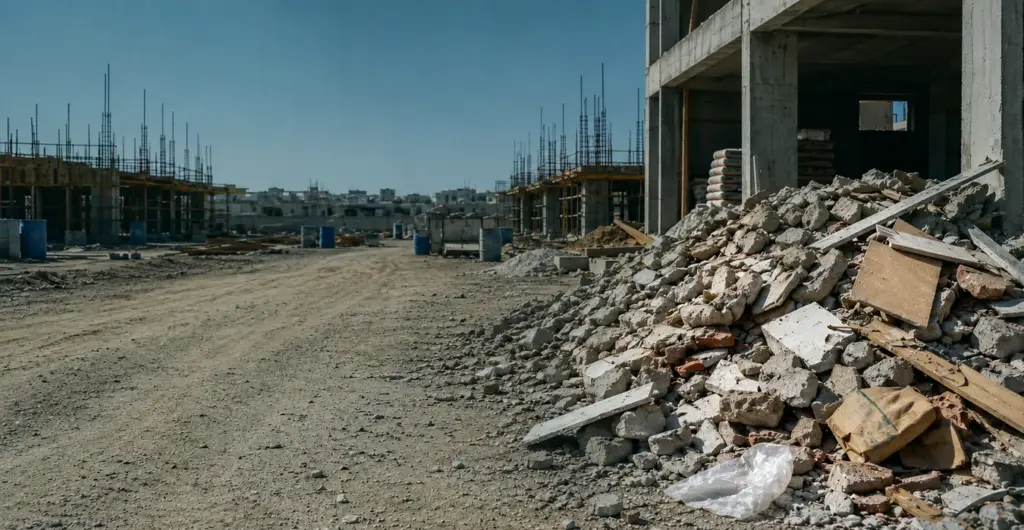
Properly managed waste collection points around the site in Kuwait help companies...