

Saturday September 26th, 2026
How Can You Turn Environmental Reports into Monthly Management Decisions?
What are environmental reports for senior management? They are concise decision reports...

It is a structured evaluation of environmental risks that may affect an acquisition, lease, financing decision or asset transfer. It builds on document review, interviews, site inspection and, where justified, sampling or specialist studies. Findings are translated into risk scenarios rather than left as a list of observations.
For each scenario, the assessment considers the source, pathway and receptor; legal or contractual responsibility; likelihood and consequence; evidence gaps; time horizon; and available controls. Requirements vary by asset type, location, transaction structure and relevant authorities in Kuwait, so scope should be confirmed after reviewing the proposed deal and site.
Environmental conditions can change purchase economics and the ability to operate, redevelop, finance or exit an asset. A hidden tank, undocumented disposal area, historical spill or uncertain discharge arrangement may create investigation costs, programme delay, restrictions on planned use, stakeholder concerns or future corrective obligations.
Review previous uses, operators, tenants, expansions, demolition and land changes. Look for activities that could have introduced persistent contamination or left buried infrastructure. The timeline should distinguish confirmed facts from assumptions and identify periods with missing records.
Examine available permits, assessments, correspondence, inspection findings, notices and action closure. The review should test whether documents match the current activity and whether conditions have been implemented. An absent record is a data gap, not automatic proof of non-compliance.
Inspect staining, distressed vegetation, fill areas, drains, interceptors, wells and low points, and review prior sampling. Consider potential off-site migration and incoming impacts from neighbouring land. Intrusive testing should be targeted by a defensible conceptual site model.
Review chemical inventories, safety information, tanks, pipelines, transformers, refrigerants, asbestos-related information where relevant, secondary containment and spill history. Record capacity, condition, ownership and uncertainty, not only whether an item is present.
Trace waste classification, temporary storage, transport, treatment and receipt records. Assess accumulated or unidentified material and reliance on contractors. Contract evidence should be checked against actual quantities and routes where records allow.
Assess whether current controls are sustainable under the buyer’s production, redevelopment or expansion plan. A site may be manageable at present yet require additional controls when throughput, equipment, drainage, storage or staffing changes.
| Risk tier | Typical evidence | Investor response |
| Critical | Immediate uncontrolled impact or material uncertainty blocking safe use | Pause affected decision; investigate and define controls |
| High | Credible liability with significant cost, delay or compliance effect | Quantify, negotiate protection and prepare an action plan |
| Moderate | Manageable issue requiring budget, monitoring or procedural improvement | Allocate owner, budget and post-close deadline |
| Low | Limited exposure with adequate control and evidence | Retain record and verify through routine review |
| Data gap | Evidence is insufficient to rank confidently | Request documents, interview or conduct targeted assessment |
Risk ranking should reflect consequence, likelihood, detectability, time horizon and confidence in evidence. A high-consequence issue with limited data may warrant escalation even when occurrence is uncertain. Financial estimates should show assumptions and ranges rather than present a single unsupported figure.
An operational risk register turns each finding into an owned decision. Useful fields include scenario, asset or area, cause, consequence, existing control, evidence source, inherent and residual rating, uncertainty, action, owner, cost range, deadline and transaction treatment. It should separate pre-close requirements from post-close integration actions.
Choose a consultant that understands industrial and construction activities, Kuwaiti environmental requirements, site assessment and risk analysis. The approach should be proportionate, evidence-led and clear about limitations. A useful report distinguishes facts, professional interpretation and data gaps, explains why further work is or is not recommended, and converts technical issues into decision-ready actions.
SSG can review transaction objectives, available data, site history, operational controls and potential environmental scenarios; conduct site assessments; and build a prioritised risk register. Depending on the scope, support may include risk analysis, environmental and social assessment, targeted monitoring, management measures and recommendations for pre-close or post-close action. No assessment can guarantee the absence of hidden conditions, so limitations and uncertainties should remain explicit.
It should begin early enough to influence valuation, transaction terms and the investigation programme, ideally before commitments become difficult to change. Starting early also allows time to retrieve missing records, arrange site access and complete targeted testing where justified. The exact timetable depends on transaction milestones, asset complexity and the quality of available information.
No. Due diligence evaluates existing and potential liabilities for a transaction, while an environmental and social impact assessment evaluates the potential impacts of a proposed project or change and identifies mitigation. Some evidence may overlap, but the purpose, decision context and deliverables differ. The appropriate combination depends on the asset’s current condition and future plan.
No. A desktop and visual review identifies recognised concerns and data gaps but normally does not prove the absence of subsurface contamination. If evidence indicates a credible pathway or significant uncertainty, targeted sampling or further investigation may be recommended. Scope, access and limitations should be stated clearly in the report.
The team defines plausible scenarios and estimates investigation, control, remediation, monitoring, delay and management costs using stated assumptions and ranges. It also considers timing, uncertainty and whether responsibility may sit with the seller, operator, landlord or another party. Legal allocation should be reviewed by transaction counsel; technical assessment does not determine liability by itself.
Materiality depends on potential cost, interruption, restriction on intended use, regulatory or stakeholder effect, financing implications, transaction value and the investor’s risk appetite. A relatively small issue may be material if it blocks a critical permit or development milestone. The assessment should therefore use deal-specific thresholds rather than a universal monetary cut-off.
Contract protections may allocate financial responsibility, but they do not remove physical conditions or operational controls. Investors should combine appropriate legal mechanisms with investigation, management planning, budget and verification. The seller’s capacity to honour obligations and the practical ability to access and remediate the site also matter. Legal advice is required for transaction wording.
SSG typically needs the asset location and boundaries, current and historical use, proposed transaction and future use, available assessments and permits, incident and waste records, drawings, access constraints and timetable. After reviewing these details, SSG can define a proportionate scope, required specialists and whether targeted sampling or additional assessment may be appropriate.
If you are evaluating an acquisition, lease, investment or redevelopment opportunity in Kuwait, contact SSG to discuss the asset and transaction timetable. A well-scoped Risk Management Assessment can clarify environmental due diligence priorities, expose site liability and uncertainty, and translate technical findings into actions that support valuation, negotiation and post-close planning.

What are environmental reports for senior management? They are concise decision reports...
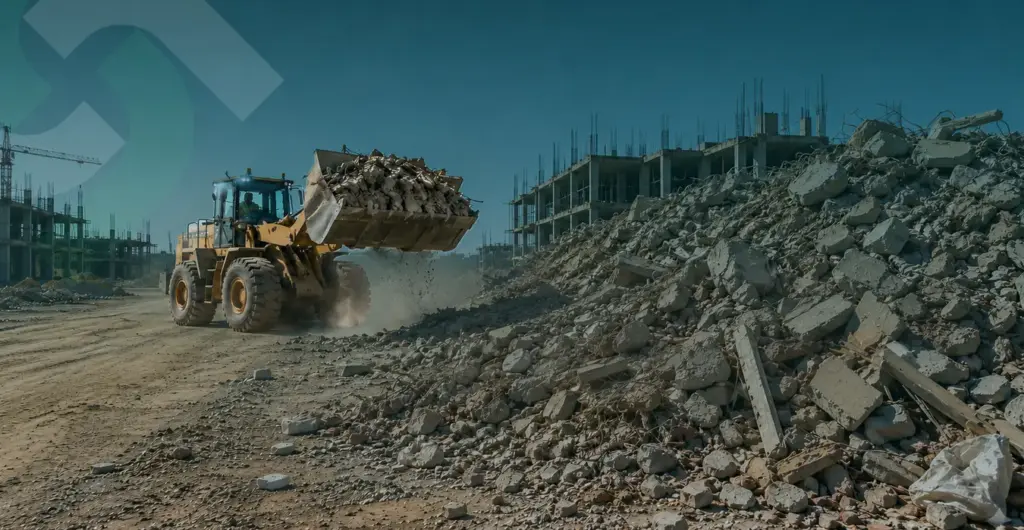
Bulky waste in facilities in Kuwait represents an administrative and environmental challenge...
Sorry, this entry is only available in العربية.