

Friday August 14th, 2026
Waste Collection Points Around the Site in Kuwait: How Can You Prevent Them from Becoming a Source of Complaints?
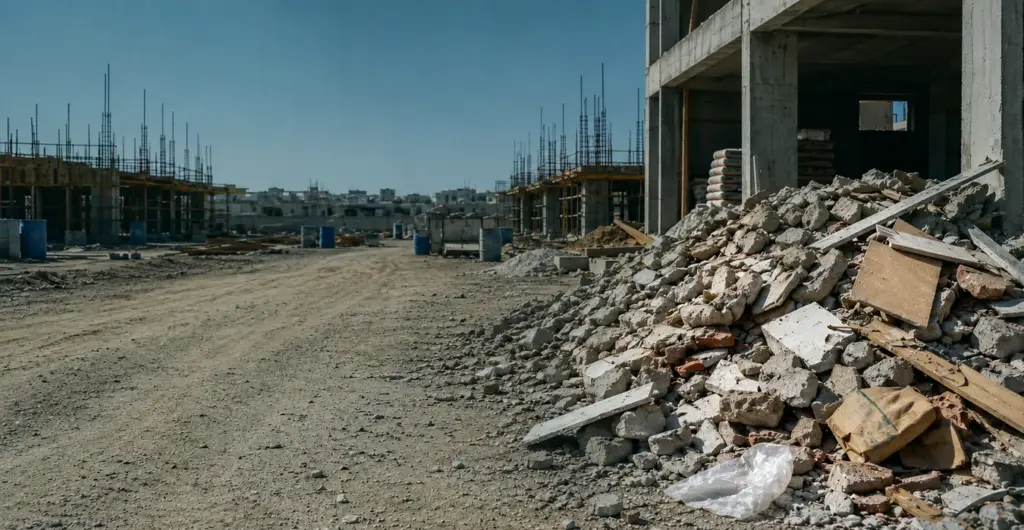
Properly managed waste collection points around the site in Kuwait help companies...

It is a system controlling document creation, review, approval, distribution, update, archive and retrieval. It covers documents directing work, such as plans and procedures, and records proving what occurred, such as monitoring results, inspections, waste transfer evidence and action closure.
The aim is not an archive isolated from operations, but a link between every obligation, owner, evidence and review date. Consultancy quality depends on understanding the activity and regulatory context, so the structure varies by sector, scale, location and project stage.
A sound system presents a consistent project record, reduces search time, prevents use of obsolete procedures or drawings and identifies missing evidence early. It supports trend analysis, contractor and staff handovers, and continuity when personnel change.
Organised records support clearer decisions and lower project risk, but do not automatically demonstrate compliance. Evidence must be accurate, complete and representative of actual work and relevant requirements in Kuwait.
Compile impact studies, baseline work, relevant requirements and correspondence, with status and tracked conditions. Separate drafts from approved versions and do not leave both unlabelled in the same folder.
Keep the current EMP, responsibility matrix and waste, spill, emergency, monitoring, training and complaint procedures. Link every procedure to its implementation record and define approval and distribution responsibilities.
Retain monitoring plans, locations, chain-of-custody records, calibration evidence, laboratory reports, raw data, operating conditions and deviations. Every result should be traceable to place, date, method, equipment or laboratory.
Organise inventories, quantities, classifications, labels, temporary storage, transport, receipt and disposal records, plus material data and spill records. Reconcile quantities across stores, production, registers and suppliers.
Keep checklists, observations, images, notifications, investigations, cause analysis and corrective actions. Show owner, deadline, closure evidence and effectiveness verification rather than only marking an item closed.
Retain needs matrices, training content, attendance, assessment and task-related competence evidence. Distinguish course attendance from the ability to apply a procedure and include contractors and new workers.
Compile daily, weekly and monthly reports, dashboards, minutes and decisions. Link figures to sources, record changes and assumptions, and preserve the version actually presented to management.
A consistent format may be: project code-document type-subject-date-revision-status. Example: PRJ01-EMP-Waste-20260905-R02-Approved. Arabic or English can be used, provided the convention is consistent, searchable and sortable and an approved file is never overwritten without change history.
The revision record should state what changed, why, who reviewed and approved it and the effective date. When a new version is issued, withdraw obsolete copies from points of use or clearly mark them against operational use while retaining required archives.
| Category | Readiness test | Acceptance evidence |
| EMP and procedures | Is the current version available at the point of work? | Revision, approval and documented distribution |
| Monitoring | Can a result be traced to sample and equipment? | Plan, custody, calibration and report |
| Waste | Do quantities and routes reconcile? | Register, inventory, transfer and receipt evidence |
| Corrective actions | Is closure evidenced and effective? | Implementation evidence and effectiveness check |
| Training | Does it cover current risks and roles? | Matrix, attendance and competence assessment |
Common errors include conflicting copies, naming files after individuals, treating email and phones as storage, images without date or location and reports not linked to samples. Uncontrolled edit access, missing backup and unclear retention also undermine record integrity.
Do not postpone evidence collection until month or project end. Details are forgotten, signatures lost and operating conditions become difficult to prove. Make recording part of the task, with weekly gap checks and monthly register review.
Choose a provider that understands the project and Kuwaiti requirements and can link the EMP with required evidence rather than supplying a generic list. Its method should define obligations, file structure, owners, review points and acceptance evidence in a system the facility can use.
Environmental consultancy can improve compliance but cannot guarantee approvals or record accuracy if teams do not apply procedures. Scope is defined after reviewing the activity, authorities and current system.
SSG can review project stages, environmental aspects, obligations and current document systems, then define records, forms, responsibilities and review frequency. Within environmental management planning, mitigation, monitoring, emergency, waste and training procedures can be linked to clear implementation evidence.
Start with the master document register. It shows what exists, what is missing, who owns each file, its revision, location and review date. Build folders around categories and obligations and link every record to its source and status.
No. Storage provides a location but not correct naming, revision control, access, approval, retention or backup. It needs clear rules, a master register, responsibilities and periodic review, with sensitive data protected under facility policy.
Use revision numbers, effective dates and controlled distribution, with one clear approved source. Notify users when updated, withdraw or mark obsolete copies and restrict archived material from operational use. Test the arrangement during site inspections.
Review active records weekly or according to risk and conduct a monthly completeness, action and revision check. Review immediately after changes, incidents, monitoring or new requirements. Frequency varies by record type, project stage and retention obligations.
A document directs work, such as a plan, procedure or blank form, and is reviewed, approved and issued. A record proves an activity occurred, such as a completed inspection, monitoring result or waste receipt, and its integrity must be protected from untracked change.
Scope determines the request, but it may include studies, EMPs, procedures, monitoring, waste, inspections, incidents, training, corrective actions, correspondence and reports. Organise around actual obligations rather than expecting one universal list.
SSG can prepare an EMP covering prevention, mitigation, monitoring, emergency response, waste and awareness according to project scope. Each action can be connected with an owner, indicator, form or record after reviewing the activity, risk and relevant requirements.
If your Kuwait project relies on scattered files or struggles to prove implementation, contact SSG to review its document system and EMP. Structured project environmental file management enables faster retrieval, prevents revision conflicts, exposes gaps and improves readiness for any review.
Properly managed waste collection points around the site in Kuwait help companies...

Sorry, this entry is only available in العربية.
Sorry, this entry is only available in العربية.