

Saturday July 25th, 2026
Sustainability Data Within the Company: How Do You Organize It Before Issuing the Annual Report?
Sustainability reports are often delayed not because of writing, but because data...
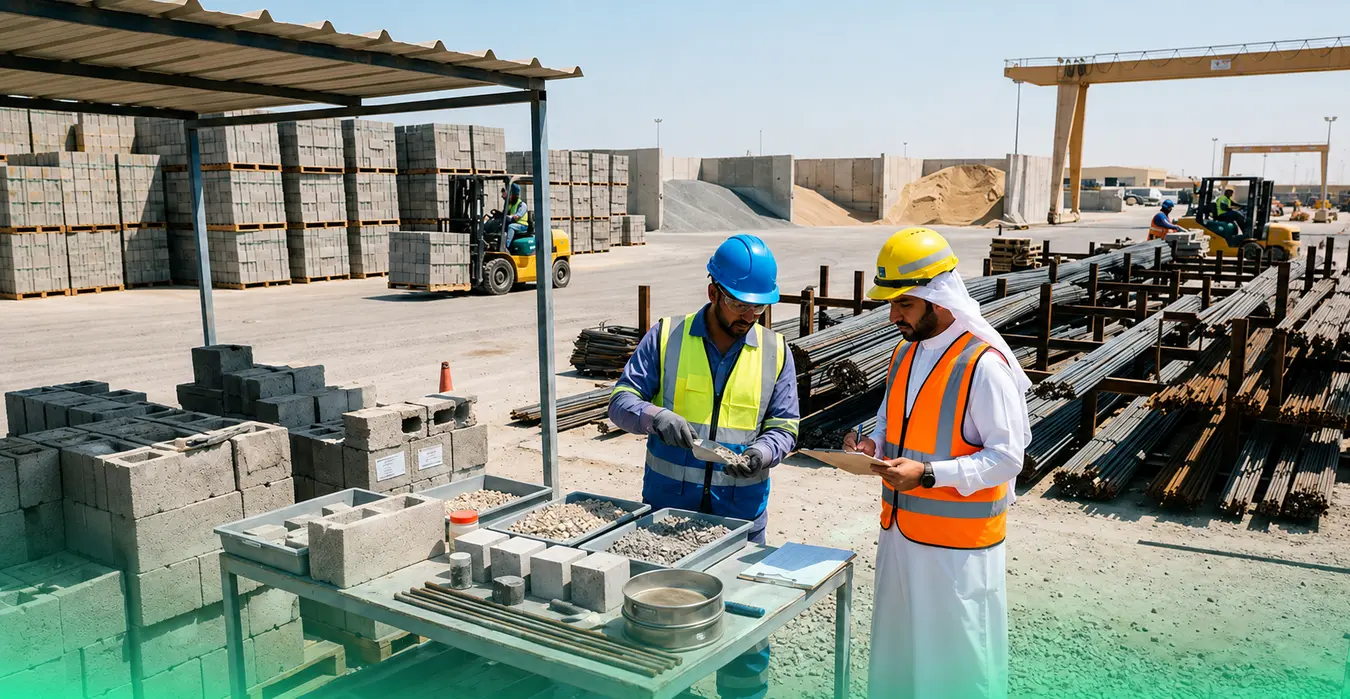
If you are preparing to start up a new factory, implement an expansion, or modify production lines, a HAZOP Study may be required to identify potential operational hazards before they develop into incidents, unplanned shutdowns, or compliance problems.
The study helps identify possible process deviations, assess their causes and consequences, and define appropriate control measures before actual operation begins.
In Kuwait, many industrial facilities rely on risk-analysis studies as part of their process-safety and operational-risk management programs to support safe operation and reduce technical and environmental risks.
A HAZOP — Hazard and Operability Study is a structured methodology for analyzing hazards and operability issues within industrial processes.
It is commonly required by:
particularly when new systems are being developed or existing systems are being modified.
The outcome is the identification of potential hazards and the development of practical recommendations to reduce them before startup.
The study team reviews:
and then analyzes possible deviations such as:
The study can be conducted as part of HAZID, HAZOP and QRA Risk Analysis, Assessment and Management services or as part of a broader industrial risk-management program.
If the project is completely new, a HAZOP study helps identify design-related hazards before startup.
Simple example:
A production line containing pumps, tanks, and valves may be correctly designed from an engineering perspective, but the HAZOP may identify unexpected operating scenarios such as:
Any expansion that changes operating conditions should trigger a new review of process hazards.
Simple example:
Adding a new tank may affect existing:
This can create operating conditions that differ from the original design basis.
When the way a process is operated changes, the associated risks may change as well.
Even apparently minor modifications may result in:
A HAZOP can help evaluate the potential impact before the change is implemented.
If the facility experiences recurring failures or repeated near-miss events, the underlying reason may be an operational hazard that was not previously identified.
Warning indicators may include:
When audits identify gaps in risk assessment, a HAZOP can be an effective tool for addressing those gaps.
The study can help:
The more complex the process or the more sensitive the materials involved, the greater the importance of a structured hazard study.
This is not limited to large industrial facilities.
It applies to any process where failure could result in:
Some:
may require documented risk assessment before approving or commissioning a project.
In these cases, a HAZOP study becomes an important part of the project’s compliance and risk-management package.
| Situation | Appropriate Study |
|---|---|
| Identify general hazards at an early project stage | HAZID |
| Analyze detailed operational hazards | HAZOP |
| Quantify risk levels and potential consequences | QRA |
If you are at the concept or preliminary-design stage → HAZID
If you are preparing for startup, expansion, or modification → HAZOP
If you need quantitative estimates of risk and consequences → QRA
In many projects, the three studies are used together within an integrated HAZID, HAZOP and QRA Risk Analysis, Assessment and Management program.
A professional HAZOP study documents:
The report typically includes:
If you answer “Yes” to any of the following questions, it may be an appropriate time to conduct the study:
Operational-risk management requires HAZOP findings to be integrated into operational safety systems.
This is particularly important for:
The objective is to convert HAZOP recommendations into practical actions.
For this reason, study outputs are often integrated with Health, Safety and Environment Plan — HSE Plan preparation to support:
Sustainable Solutions Group provides integrated operational-risk analysis studies for industrial projects.
The services are intended for factories and facilities seeking safe and compliant operation, with the aim of delivering practical reports that can be implemented and used as part of the approval process.
The work is led by:
Dr. Lina Hassan, who holds a PhD in Environmental Science and has more than 15 years of experience leading environmental impact assessments for energy and infrastructure projects across the Gulf region. She is accredited by the International Association for Impact Assessment.
Dr. Lina Hassan — Principal Environmental Consultant, PhD in Environmental Science, accredited by the International Association for Impact Assessment, with more than 15 years of experience delivering approved environmental impact assessments for industrial and infrastructure clients in Saudi Arabia, the UAE, and Oman.
Our environmental impact assessment methodology follows the guidance of the ISO 14001 international standard and applicable local regulatory frameworks.
All field data is collected using calibrated equipment and documented through traceable chains of custody.
Answer: An Environmental Impact Assessment is a study used to evaluate how your project may affect air, water, soil, and communities.
If you are developing a factory, resort, road, or major development project in the region, you are likely to need one.
We manage the complete process—from scoping through approval by the competent authority.
Answer: Most Environmental Impact Assessments take approximately 8 to 12 weeks, depending on project complexity and data availability.
We provide a written schedule at the beginning of the assignment and issue weekly updates.
No surprises.
Answer: Yes.
We have direct experience submitting and obtaining approval for studies with environmental ministries, municipal authorities, and international financing institutions.
We understand the requirements—and how to address them.
Answer: We do more than write reports.
We integrate with your project team, collect field data ourselves, and design mitigation strategies that can actually work in practice.
Our studies are designed for approval—and for implementation as well.
Delaying a HAZOP Study is not simply an operational risk; it can threaten worker safety and the long-term sustainability of your investment. At SSG, we provide field-based engineering expertise to conduct detailed risk analyses that identify weaknesses before they develop into incidents. Contact our experts today to strengthen the safety of your operations and support compliance with high industrial-safety standards in Kuwait.
Sustainability reports are often delayed not because of writing, but because data...

A water spraying log at construction sites in Kuwait helps demonstrate that...

Environmental Impact Assessment (EIA) studies are fundamental tools to ensure the sustainability...