Internal Waste Segregation Area in Kuwait: How Do You Organize It Without Disrupting Operations?
22 Aug

Internal Waste Segregation Area in Kuwait: How Do You Organize It Without Disrupting Operations?

Saturday August 22nd, 2026

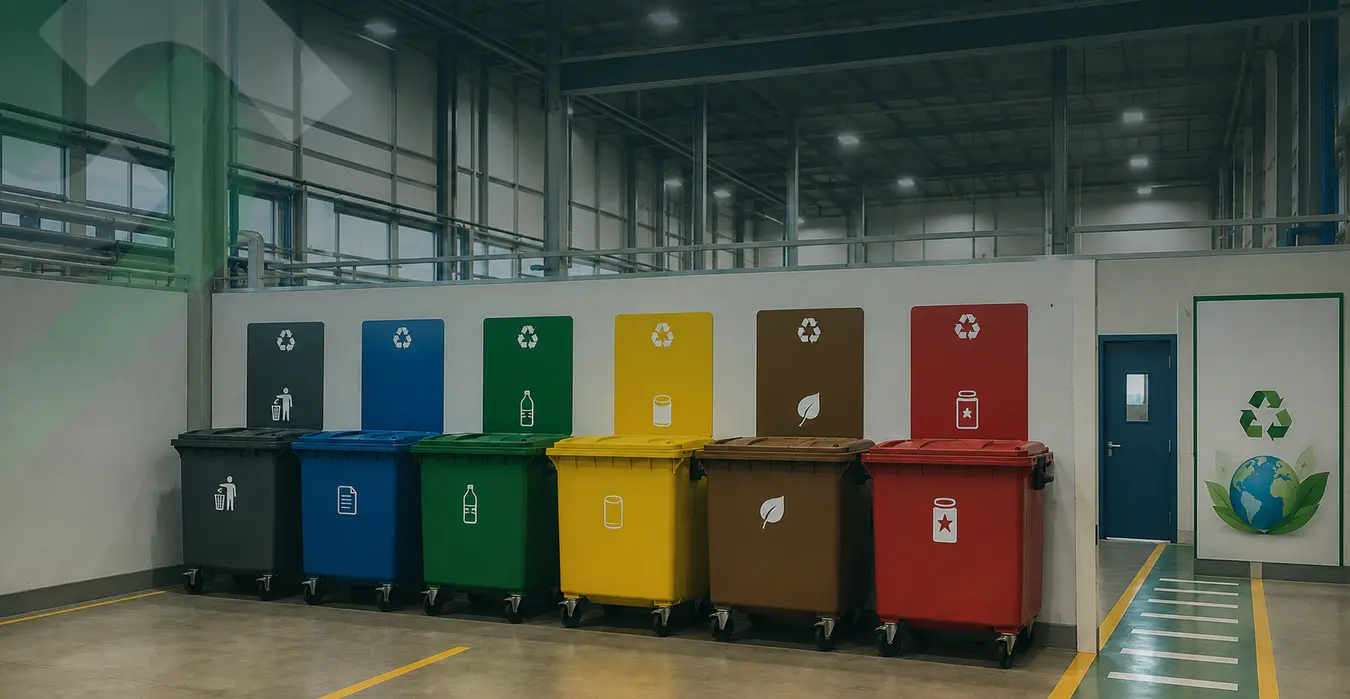
Creating an internal waste segregation area in Kuwait does not mean allocating a large space or introducing complicated procedures that disrupt the movement of employees and services. Effective organization begins by identifying the types and sources of waste, then selecting a suitable location, clearly identified containers, and a collection route that does not interfere with daily operations.

This organization becomes particularly important in shopping malls, hotels, light industrial facilities, and establishments that regularly generate paper, cardboard, plastic, metal, glass, and organic waste. The objective is not simply to install multiple containers, but to create a system that employees can understand, implement, and monitor without unnecessarily increasing time or cost.

When Does a Project Need Environmental Consultancy in Kuwait?

A project may need environmental consultancy when waste types, quantities, storage methods, or transportation arrangements are unclear, or when waste mixing, liquid leaks, overflowing containers, and odors occur repeatedly. Consultancy also becomes important when opening a new facility, expanding operations, changing contractors, preparing an Environmental Management Plan, or reviewing compliance with relevant environmental requirements.

Environmental requirements vary according to the sector, project size, location, and nature of the waste. Therefore, professional work usually begins with reviewing the activity and waste-generation sources before determining the area design, number of containers, or collection frequency.

Why Is an Internal Waste Segregation Area Important for Projects in Kuwait?

An internal segregation area helps a facility separate waste at source before different materials become mixed, improves the potential for recycling recoverable materials, and reduces disorder in service and storage areas.

It also provides clearer information about waste types and quantities, supporting decisions related to contracting collection and transportation companies, preparing reports, and monitoring environmental performance.

However, the success of the area does not depend on container colors alone. The location must be compatible with operational routes, instructions must be understandable, and the responsibilities of employees, supervisors, and contractors must be clearly defined.

What Is an Internal Waste Segregation Area?

An internal waste segregation area is a designated space within a facility or service area where waste is collected after being separated into specified categories before being transferred to a temporary storage location or handed over to the party responsible for collection, recycling, or disposal.

The area may be:

  • A small segregation point near offices or kitchens.
  • A designated service room in a hotel or shopping mall.
  • A back-of-house area for receiving cardboard and plastic from retail stores.
  • A collection point within a light industrial facility.
  • A central area receiving waste from several floors or departments.
  • A number of distributed points connected to one main collection location.

It is important to distinguish between a segregation point and a temporary storage area. A segregation point is designed to facilitate separation at or close to the source, while a temporary storage area may require additional controls relating to capacity, ventilation, cleaning, leakage prevention, and accessibility during transportation.

SSG’s waste management service explains that organized waste management plans include waste classification, identification of temporary storage areas, source-segregation mechanisms, and arrangements for transportation to licensed or approved parties according to the nature of the waste.

Does Every Facility Need the Same Design?

No. The appropriate design for a shopping mall differs from that required for a hotel or light industrial facility.

In a shopping mall, challenges may focus on waste from retail stores and restaurants, cardboard, beverage containers, and loading and unloading activities.

Hotels may generate waste from kitchens, guest rooms, laundries, offices, and maintenance activities.

Light industrial facilities may generate packaging waste, raw-material residues, oils or liquids, and materials that require separate handling.

The quality of environmental consultancy depends on understanding the operational and regulatory nature of the activity. Therefore, purchasing containers or allocating a room before conducting an initial waste inventory and reviewing movement routes within the facility is not recommended.

When Does a Project Need an Internal Waste Segregation Area?

A facility may need to establish or reorganize such an area in the following situations:

Establishing a New Facility or Project

Defining segregation points during the planning stage is easier than adding them after operations begin.

At this stage, employee movement routes, cleaning carts, service elevators, and loading areas can be reviewed to prevent future conflicts.

Expanding an Existing Facility

Increasing the number of stores, rooms, or production lines may increase waste quantities or introduce new waste types while existing containers and spaces remain unchanged.

High Levels of Waste Mixing

When recyclable materials arrive mixed with food residues or liquids, their recovery potential decreases and additional cleaning may be required, or the materials may be rejected by the receiving party.

Repeated Container Overflow

Rapid filling may indicate insufficient capacity, an inadequate collection schedule, or a poorly selected location that encourages employees to place all materials in the nearest container.

Odors, Pests, or Leaks

These problems cannot be resolved merely by adding more containers. They require reviewing container types, emptying frequency, cleaning procedures, temperature conditions, and the nature of organic or liquid waste.

Changing the Cleaning or Waste Management Contractor

When the contractor changes, responsibilities, collection routes, handover points, and required records should be clarified so that segregation procedures do not stop after a short period.

Reviewing Environmental Compliance

The facility may need to document waste types, improve temporary storage arrangements, and identify appropriate procedures in accordance with relevant environmental requirements and conditions in Kuwait and the regulatory authorities associated with its activity.

The Kuwait Environment Public Authority publishes Environmental Protection Law No. 42 of 2014, as amended by Law No. 99 of 2015, and provides services related to waste management and approved environmental lists. Therefore, requirements relevant to each activity should be reviewed rather than relying on a single model for every facility.

How Do You Organize an Internal Waste Segregation Area Without Disrupting Operations?

  1. Start by Identifying Waste at the Source

Before selecting the location, observe where waste is generated during a normal working day.

The facility can be divided into areas such as:

  • Administrative offices.
  • Kitchens and restaurants.
  • Guest rooms or public areas.
  • Shops and storage areas.
  • Maintenance areas.
  • Production and packaging lines.
  • Loading and receiving areas.

Record the waste type, approximate quantity, peak generation times, and current transportation method.

Highly precise figures are not required at the beginning. The objective is to understand the operational situation and identify points where mixing or accumulation occurs.

  1. Separate Only the Categories That Can Actually Be Managed

Installing seven or eight different containers does not necessarily create a better system.

It may be more practical to begin with three or four clear categories, such as:

  • General waste that cannot be recovered within the available system.
  • Clean paper and cardboard.
  • Plastic and metal containers.
  • Organic waste.
  • A separate category for special waste according to the nature of the activity.

Each category must be connected to a genuine route after collection.

There is no benefit in separating a material inside the facility if it will be mixed again during transportation or if no clear arrangements exist for its collection.

  1. Choose a Location Close to the Service Route

The appropriate location is not necessarily the nearest available empty space.

It should meet a suitable combination of the following criteria:

  • Easy access for cleaning personnel.
  • No obstruction of emergency exits or corridors.
  • Located away from customer reception areas wherever possible.
  • Floors and surfaces that are easy to clean.
  • Appropriate ventilation according to the nature of the waste.
  • Protection from heat and rain where part of the area is outdoors.
  • Easy access for collection carts or transport vehicles.
  • No crossing of waste routes with clean food or raw-material routes.
  • Ability to monitor the area and prevent unauthorized use.

In hotels and large shopping malls, distributed segregation points connected to a central area may be more practical than requiring employees to transport every material over long distances.

  1. Choose Containers According to Use, Not Color Alone

The container should suit the type of waste, its weight, generation rate, and emptying method.

Practical considerations include:

  • Container capacity.
  • A tightly closing lid where necessary.
  • Resistance to leakage.
  • Ease of washing and sanitizing.
  • Suitable wheels.
  • Ability to open without direct contact.
  • Capacity to withstand the expected load.
  • Compatibility with collection carts or lifting systems.
  • Absence of sharp edges or damaged parts.

Colors may be used as a supporting tool, but the material name and clear pictures or examples should also be provided.

Relying on color alone may lead to errors among new employees, contractors, or visitors.

  1. Write Employee Instructions in Operational Language

Instead of using a general phrase such as “Protect the Environment,” use instructions that answer three questions:

  1. What goes into this container?
  2. What does not go into it?
  3. What should I do if I find an unknown material or a spill?

A practical example for a cardboard container:

Place Here: Clean, flattened cardboard boxes.
Do Not Place Here: Wet cardboard or cardboard contaminated with food or oils.
Action: Remove plastic and internal packaging materials and flatten the box before placing it inside.

Photographs and examples related to the facility’s actual activities can reduce mistakes more effectively than lengthy instructions.

  1. Define Collection Routes and Schedules

The system should define:

  • Who collects waste from departments?
  • How often is waste collected?
  • Which route is used?
  • Where does each waste category end up?
  • Who checks segregation quality?
  • Who handles spills or damaged containers?
  • What happens if the area becomes full before the scheduled collection?

At high-traffic facilities, collection may be carried out outside peak periods, such as before a shopping mall opens, after restaurant service, or during less busy hours.

  1. Conduct a Limited Trial Before Full Implementation

Start with one floor or one department for two to four weeks.

Monitor:

  • Percentage of materials placed in the wrong container.
  • How quickly each container becomes full.
  • Time required by employees for collection.
  • Areas where accumulation occurs.
  • Complaints or operational difficulties.
  • Whether the contractor maintains segregation after receiving the waste.

Container locations, sizes, or instructions can then be adjusted before the system is implemented throughout the entire facility.

What Are the Risks of Failing to Organize the Segregation Area?

Increased Operational Risks

Overflowing containers or containers placed in corridors can obstruct employees and service carts and increase the likelihood of spills, trips, or damage to surrounding materials.

Higher Future Corrective Costs

When paper, cardboard, and plastic become contaminated by food waste or liquids, additional effort may be required for segregation and cleaning, or the facility may lose the ability to send some materials for recycling.

Difficulty Monitoring Contractor Performance

Without clear records or defined collection points, it may be difficult to determine whether a problem is caused by employees, the cleaning company, the transportation schedule, or insufficient container capacity.

Odors and Hygiene Problems

Improper storage of organic or liquid waste may cause odors, leaks, and pest attraction, particularly when collection and cleaning frequency does not match the nature of the activity and Kuwait’s climatic conditions.

Reduced Ability to Demonstrate Improvement

A facility cannot properly evaluate the success of its environmental program without data on waste quantities, segregation rates, contamination incidents, and container fill levels.

Difficulty Achieving Environmental Compliance

Failure to classify waste or mixing special waste with general waste may make environmental procedures more difficult to implement.

Regulatory outcomes vary according to waste type, activity, and competent authority. Therefore, the scope of work should be determined after reviewing the facility’s actual circumstances.

What Should Be Reviewed Before Requesting Environmental Consultancy?

Use the following checklist before contacting an environmental consultancy company in Kuwait:

  • Main activity and supporting activities.
  • Project location, area, and governorate.
  • Project stage: design, construction, operation, or expansion.
  • Number of employees and visitors or production volume.
  • Types of waste generated.
  • Approximate daily or weekly quantities.
  • Current container locations.
  • Photographs of collection and storage areas.
  • Cleaning and transportation schedule.
  • Current contractor information.
  • Recyclable waste streams.
  • Liquid or special waste, if any.
  • Spill incidents, odors, or complaints.
  • Previous environmental studies and plans.
  • Available environmental data.
  • Relevant regulatory requirements.
  • Potential risks to workers, the environment, and operations.

The clearer the initial information, the easier it becomes to determine whether the facility needs a new segregation area, modified collection points, a Waste Management Plan, employee training, or a contractor performance review.

Practical Table for Selecting the Appropriate Environmental Service

Facility Situation Appropriate Service Practical Objective
New facility Waste segregation and management system design Determine points, containers, and collection routes before operation
Existing shopping mall Field review of segregation points Reduce mixing of retail and restaurant waste
Hotel Waste Management Plan and training Organize waste from kitchens, rooms, and maintenance
Light industrial facility Waste inventory and classification Separate general, operational, and special waste
Facility experiencing odors Storage and collection assessment Review containers, cleaning, and collection frequency
Recently expanded facility Environmental Management Plan update Align procedures with the new scale of operations
Low employee compliance Environmental training program Convert instructions into daily practices
Repeated contractor errors Site audit and monitoring Clarify responsibilities and measure implementation quality
Lack of data Monitoring and recording program Measure quantities, segregation rates, and performance indicators

How Do You Monitor the Segregation Area After It Begins Operating?

The segregation area requires regular monitoring, but the process does not need to become a complicated administrative system.

A simple weekly form can include:

  • Floor cleanliness.
  • Condition of containers and lids.
  • Clarity of labels.
  • Presence of materials in the wrong container.
  • Fill level of each container.
  • Presence of odors or pests.
  • Leakage.
  • Compliance with collection schedules.
  • Employee observations.
  • Corrective actions and responsible persons.

Three monthly indicators can also be selected:

  1. Percentage of containers containing incorrect materials.
  2. Number of overfilling or spill incidents.
  3. Quantity of separated recyclable materials.

The focus should not be on figures alone.

An increase in the quantity of segregated materials does not necessarily mean the system is successful if those materials are contaminated or cannot be accepted by the receiving party.

The Role of Employee Training in Successful Internal Segregation

Waste segregation systems often fail when employees receive general instructions only once.

Effective training should be connected to the daily tasks of each group.

A cleaning worker needs to understand transportation routes and how to handle leaking bags.

A restaurant employee needs to understand the difference between organic waste and packaging materials.

A warehouse employee needs to know how to flatten cardboard and separate plastic.

The supervisor needs to understand inspection, recording, and non-conformance reporting procedures.

Training may include:

  • A short induction session before implementation.
  • Practical training beside the containers.
  • Illustrated labels.
  • Instructions within new-employee induction programs.
  • Short refresher meetings.
  • Field assessment after training.
  • Retraining when mixing rates increase.

SSG’s Environmental Management Plan methodology emphasizes integrating monitoring, response, awareness, and training procedures within the management system rather than treating them as separate activities.

How Do You Choose an Environmental Consultancy Company in Kuwait?

Experience in the Facility’s Sector

The consultant should understand hotel, shopping mall, or light industrial operations because the appropriate solution depends on workflows, service areas, and peak periods.

Understanding Kuwaiti Requirements

The company should be able to review relevant environmental regulations according to the nature of the activity and identify the information or studies required without making uncertain promises regarding approvals.

Field Inspection Capability

Relying on drawings or photographs alone may fail to reveal conflicts between waste routes and employee or customer movement.

A site inspection helps evaluate location, capacity, ventilation, cleanliness, and accessibility.

Clear Methodology

The proposal should preferably explain the scope of work, deliverables, required information, facility responsibilities, and expected implementation period.

Practical Solutions

A good solution considers available space, budget, number of employees, and contractor capacity rather than relying solely on theoretical recommendations that are difficult to implement.

Training and Follow-Up Capability

Design alone is not sufficient.

Environmental training and subsequent review help establish the procedures and measure the level of improvement.

How Can SSG Help Organize an Internal Waste Segregation Area?

The SSG team can review the facility’s requirements and determine the scope of service according to the activity type, location, and scale of operations.

Support may include:

  • Identifying waste types and sources.
  • Assessing current collection points.
  • Reviewing waste transportation routes.
  • Recommending segregation and temporary storage locations.
  • Determining appropriate container types and capacities.
  • Preparing segregation, collection, and cleaning procedures.
  • Preparing employee instructions and labels.
  • Defining the roles of Facility Management and contractors.
  • Designing monitoring indicators and reports.
  • Delivering environmental training programs.
  • Reviewing solid and liquid waste streams.
  • Supporting the preparation or update of the Environmental Management Plan.

SSG provides a specialized Solid and Liquid Waste Management service that includes waste classification and the organization of storage, segregation, transportation, and monitoring.

The segregation system can also be incorporated into Environmental Management Plans for Projects and Facilities to define responsibilities, monitoring procedures, training, and responses to abnormal situations.

The scope of work is determined after reviewing the details of the activity because the requirements of a shopping mall in Kuwait City may differ from those of a light industrial facility in Ahmadi, a hotel in Hawalli, or a service facility in Farwaniya, Jahra, or Mubarak Al-Kabeer.

Steps to Request Environmental Consultancy From SSG

  1. Contact the SSG Team

Start by sending a brief description of the facility and the current problem, such as waste mixing, insufficient space, or recurring odors.

  1. Send Project Information

Information may include layouts, photographs, waste types, approximate quantities, number of employees, and current contractor information.

  1. Review the Nature of the Activity

Waste sources, operational routes, and risks associated with storage and collection are analyzed.

  1. Determine the Appropriate Service

The facility may require a limited review, segregation system design, Waste Management Plan, employee training, or an integrated Environmental Management Plan.

  1. Conduct the Site Inspection or Study

The area, containers, transportation routes, cleaning procedures, records, and employee practices are reviewed.

  1. Present Findings and Recommendations

Deliverables include practical actions, implementation priorities, assigned responsibilities, and proposed monitoring indicators.

  1. Training and Subsequent Review

Implementation can be reviewed after operations begin to verify that instructions are clear and address problems that emerge during actual use.

Frequently Asked Questions About Internal Waste Segregation Areas in Kuwait

Does Every Facility Need an Internal Waste Segregation Area in Kuwait?

The need for a separate area depends on waste quantities and diversity, facility size, and operational activities.

Limited segregation points may be sufficient for small offices, while hotels, shopping malls, and factories may require distributed points and a central collection area.

The correct first step is to identify waste streams and movement routes and then determine whether the facility requires a complete room, a service area, or only distributed containers.

What Types of Containers Are Suitable for Internal Waste Segregation?

Containers should be selected according to waste type, weight, generation rate, and transportation method.

Organic waste may require sealed containers that are easy to wash, while cardboard requires a dry area where boxes can be flattened and collected.

It is preferable to use clear names and images alongside colors and to ensure that containers are leak-resistant, easy to open and clean, and compatible with collection equipment.

How Can We Prevent Employees From Mixing Waste?

Preventing mixing starts by limiting the number of categories to a level that can be understood and managed and then positioning containers near waste-generation sources.

Illustrated instructions should clearly identify accepted and prohibited materials, supported by practical training and monitoring during the first few weeks.

Containers should also be inspected and recurring errors recorded because continued mixing may indicate an unsuitable location or unclear instructions rather than poor employee behavior alone.

Should All Recyclable Waste Be Segregated?

A facility does not necessarily need to begin by separating every recyclable material.

It is better to identify materials generated in suitable quantities that can be stored, transported, and accepted without mixing or contamination.

A facility may begin with cardboard and plastic and metal containers and expand the system once the first phase is successful.

There must also be a clear route for each material after it leaves the segregation area.

Where Should the Segregation Area Be Located in a Hotel or Shopping Mall?

A location close to service routes, back-of-house elevators, and loading areas is generally preferable, provided that it does not obstruct customer movement or emergency exits.

It should be easy to clean and access and suitable for the waste type in terms of ventilation and leakage prevention.

Small points on individual floors connected to a central area may be more efficient than relying on one room located far from waste-generation sources.

What Information Is Required Before Designing a Segregation Area?

Relevant information includes the type of activity, number of employees or visitors, waste-generation sources, approximate quantities, current container locations, collection schedule, facility layout, photographs of service areas, and types of recyclable or special waste.

Data on complaints, spills, odors, and current contracts can also help identify the causes of problems and select a practical solution.

Does a Segregation Area Help Achieve Environmental Compliance?

An organized segregation area helps improve waste classification, storage, and monitoring and provides clearer information about practices within the facility.

However, it does not by itself constitute complete evidence of compliance because requirements vary according to the activity, waste type, and competent authority.

Additional procedures may be required for transportation, documentation, storage, training, or environmental reporting.

Does SSG Provide Waste Management Training for Employees?

Environmental training can be incorporated into waste organization and management services according to the facility’s needs.

It may cover waste categories, container use, collection routes, spill response, and the responsibilities of supervisors and contractors.

Training content and duration are determined after reviewing the nature of the activity, number of employees, current level of knowledge, and operational issues that need to be addressed.

Contact SSG for Environmental Consultancy

If your facility is experiencing waste mixing, overflowing containers, or low employee compliance, or if you are planning to establish an internal waste segregation area in Kuwait, you can contact SSG for an initial assessment of your site requirements and to determine the appropriate environmental service.