

Saturday June 6th, 2026
(العربية) قبل الهدم أو التجديد خطة إدارة الأسبستوس لتجنب الإيقاف والمخاطر في الكويت
Sorry, this entry is only available in العربية.
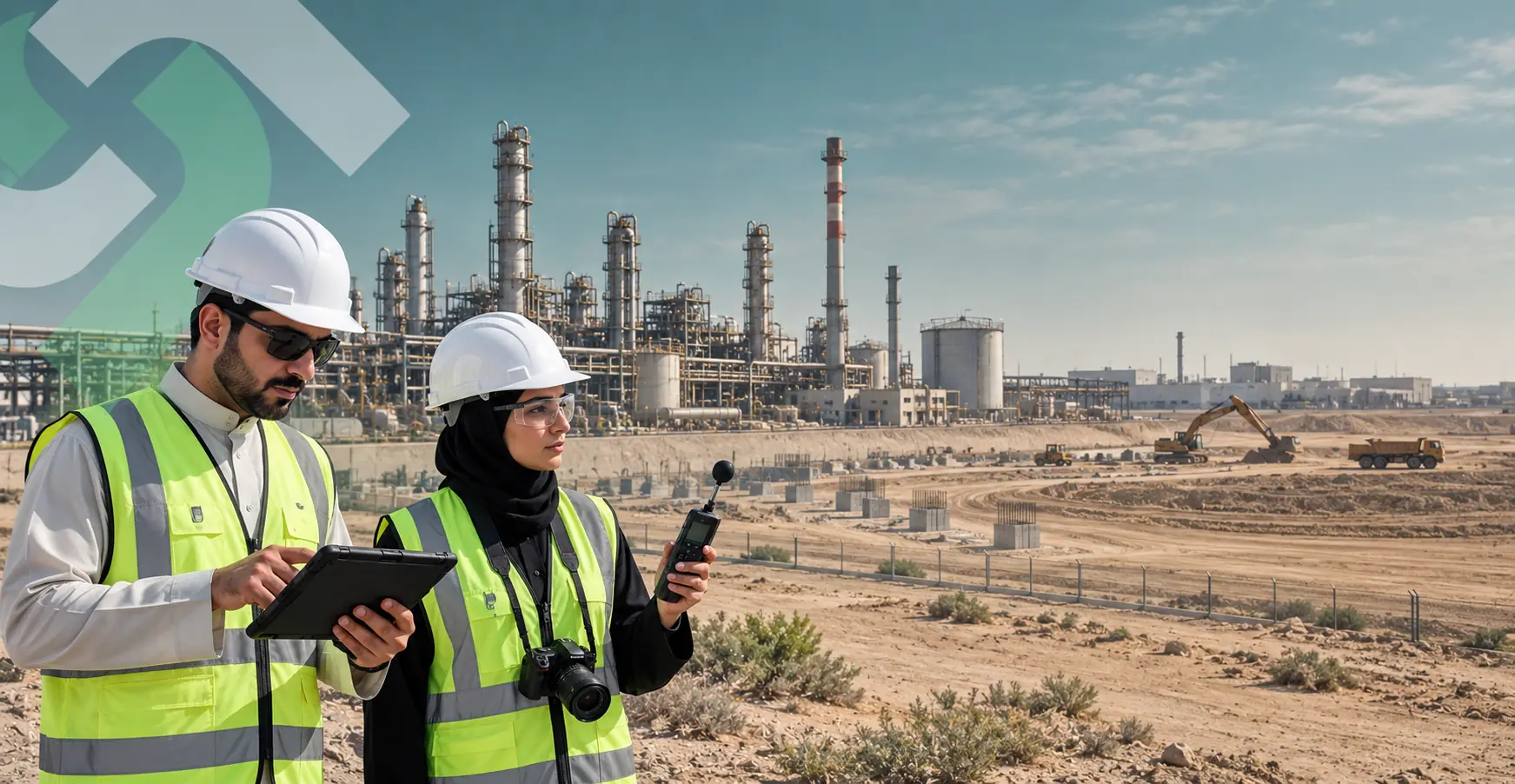
It first identifies current obligations and implementation status, then tests how expansion will affect them. It reviews documents, monitoring, management plans, equipment, capacity and location and produces a gap register covering items to update, assess or include in design before implementation.
The question is not only whether the facility complies today. Existing treatment, containment or monitoring may be adequate at present load but insufficient after expansion. The change may require a limited or detailed environmental assessment depending on its nature, site sensitivity and competent-authority requirements.
Compliance review focuses on existing requirements, controls and records and whether they are implemented and adequate. Impact assessment examines future effects, alternatives, mitigation and monitoring. A compliance review often establishes a reliable baseline before the need for an update or new assessment is defined.
An audit may find current nonconformities that must be closed regardless of expansion, while impact assessment identifies future risks. Combining both prevents new investment from being built on old operational gaps.
Document authorised, actual and target capacity, hours, shifts, lines and new or modified equipment. Define expansion boundaries, shared utilities, construction and commissioning rather than relying only on a production percentage.
Compare types, properties, quantities, deliveries, storage, compatibility and containment. A material quantity may change little while different properties, packaging or transfer create new emissions, waste or risk.
Identify current and new sources, control-system performance and capacity, and previous measurements and operating conditions. Include intermittent releases, start-up, shutdown and night-time noise rather than routine averages alone.
Compare water use and wastewater flow, composition and peaks with network, storage, treatment and discharge capacity. One constituent or short peak may become limiting even if average flow remains within design capacity.
Forecast quantities by type, segregation, temporary storage, transport and supplier capacity. Review containment, labels and records and identify new maintenance, treatment and packaging wastes.
Confirm monitoring locations, frequency and indicators cover new sources and can distinguish expansion performance. Update spill, failure and fire scenarios, equipment, roles and notification channels for new materials and quantities.
Review site boundaries, sensitive receptors, neighbours, workforce and truck movement, routes and peak hours. Noise, dust, congestion and cumulative effects may occur outside the facility boundary.
Screen the change against the existing study, site sensitivity, expected impact and data quality. The outcome may be a screening note, management and monitoring update, a limited environmental assessment focused on defined effects, or a detailed assessment covering baseline, alternatives, impacts and management.
Assessment level should not be selected by project name or budget alone. SSG’s related article comparing limited and detailed environmental assessment explains key distinctions, while final scope depends on project details and competent-authority requirements.
| Proposed change | Initial review | Potential output |
| Operating-hour increase only | Loads, peaks, noise and records | Monitoring and management update |
| New line or equipment | Sources, capacity, materials and alternatives | Assessment update or limited study |
| Material increase in discharge or emission | Treatment, baseline and receptors | Broader assessment and design controls |
| Larger footprint or new site | Land use, surroundings and cumulative effects | Potential detailed assessment |
| Old or unrepresentative study | Data validity and project change | Updated monitoring or study |
Equipment may be purchased without adequate treatment or monitoring capacity, or containment and space requirements may emerge after design is fixed. Waste can accumulate and operations may be delayed. Without a clear baseline or separation of new sources, facility data may also fail to demonstrate performance.
Common errors include assuming present requirements automatically cover expansion, treating impact percentage as equal to production growth, omitting construction and commissioning, and relying on measurements taken under unrepresentative load.
Choose a provider that understands the sector and Kuwaiti requirements and can read drawings and material and energy balances and connect them with risk and monitoring. The method should define comparison boundaries, baseline, gaps, assessment level, outputs and responsibilities.
Consultancy quality depends on understanding the activity and regulatory context. Review can improve compliance and reduce delay and modification risk but cannot guarantee approvals or eliminate every risk. Scope follows detailed review.
SSG can review current conditions, the proposed change, studies, monitoring and management plans to identify gaps and data needs. Support may include compliance review, defining the suitable assessment level, updating management and monitoring plans and preparing recommendations appropriate to the facility and expansion.
Not necessarily. It depends on change magnitude, new impact sources, existing-system capacity, site sensitivity, the validity of the current study and competent-authority requirements. A focused update or limited assessment may suffice, while larger changes can require detailed study. Start with documented screening.
Begin during feasibility or early design and before equipment purchase or final layout. This allows control, treatment, storage and monitoring needs to enter design, budget and schedule before options narrow and modification costs rise.
A limited assessment generally focuses on defined effects for a less complex project or narrower change. A detailed assessment requires broader baseline data, alternatives, impact analysis and management planning. Selection depends on project nature, location, effects and relevant requirements rather than the label alone.
They may be if current, representative of the location, sources and operating conditions, and inclusive of required indicators. Old data or measurements taken at low load or unsuitable locations may need updating. Suitability should be assessed before using them as the comparison baseline.
Compare design capacity, actual performance and peak conditions with expected post-expansion loads, quantities and characteristics. Review maintenance, failures, storage, bottlenecks and monitoring. Average flow or nominal equipment rating alone is insufficient.
Provide current and proposed process descriptions, capacity and hours, drawings, materials and equipment, water and energy data, emissions, wastewater and waste, previous studies, monitoring and management plans, and incident and deviation records. The final list varies by sector and location.
SSG can review the activity, expansion, location, data and existing studies to identify gaps and propose a suitable review, update or environmental assessment scope. Final requirements remain linked to project details, relevant regulations and competent environmental authorities in Kuwait.
If you plan to increase production, add a line or expand a site in Kuwait, contact SSG for an initial environmental needs review. Pre-expansion environmental compliance review identifies gaps early, improves design and defines necessary study, monitoring and controls before implementation.
Sorry, this entry is only available in العربية.
Sorry, this entry is only available in العربية.
Sorry, this entry is only available in العربية.