

Monday August 17th, 2026
Sudden Odors Around a Facility: How Do You Start an Organized Environmental Investigation Instead of Guessing?
The appearance of an unusual odor around an industrial or commercial facility...

It is the process of checking whether the environmental assessment, commitments and approval basis still represent the project after design development. The team compares the approved description and assumptions with the proposed change, identifies affected environmental and social aspects, tests mitigation adequacy and records the decision path.
Adding a production line, utility, storage area, access road or supporting facility may introduce new sources and receptors. Removing an activity can also change traffic, waste or restoration commitments. The updated project description should show interfaces, not only the new component.
Higher throughput may affect fuel and water demand, emissions, wastewater, noise, traffic, raw materials, hazardous storage and waste quantities. A percentage increase alone does not determine significance; the review should compare absolute loads, peak conditions, control capacity and existing headroom.
Different equipment, fuels, chemicals, operating temperatures or control technologies can alter the type and distribution of impacts. Efficiency improvement may reduce one impact while increasing another, so the assessment should consider the full operating balance.
Moving a facility, outfall, stockpile, camp or access route may place it closer to residences, habitats, drainage lines, coastlines, utilities or neighbouring operations. Even a short relocation can change baseline relevance and the effectiveness of earlier mitigation.
Night work, additional excavation, dewatering, blasting, temporary batching, longer duration or a new logistics route may change dust, noise, water, waste and community effects. Temporary works require screening when their impacts were not represented in the original assessment.
| Change type | Key screening question | Possible response |
| Scope | Does it add an activity, source or receptor? | Update description and assess affected aspects |
| Capacity | Do peak or annual loads exceed assessed values? | Recalculate loads, controls and monitoring |
| Process | Are materials, emissions or failure scenarios different? | Focused technical and risk review |
| Location | Is the baseline or receptor relationship different? | Baseline review and location-specific assessment |
| Construction | Are methods, duration or temporary works new? | Update construction EMP and supervision |
| Utilities/waste | Do flows, treatment or disposal routes change? | Review balance, capacity and documentation |
A baseline review is particularly important when the location or footprint moves, substantial time has passed, surrounding land use has changed, new sensitive receptors have appeared, or the original data did not cover the changed impact pathway. The review should state which data remain valid and which need confirmation or new measurement.
Capacity changes should be translated into environmental loads. Compare normal, peak, start-up, shutdown and abnormal conditions; assess cumulative operation where existing and new units run together; and review whether treatment, storage and emergency systems retain adequate capacity. Linear scaling may be inappropriate where controls have thresholds or bottlenecks.
The EMP should be updated when the change affects controls, responsibilities, monitoring locations or frequencies, emergency scenarios, waste routes, training or reporting. Revised measures need owners, deadlines, acceptance criteria and records. Obsolete drawings and instructions should be withdrawn from points of use, while the change history is retained.
Choose an environmental consultancy that can understand design information, compare alternatives, assess impacts and translate findings into practical management controls. It should know the relevant requirements in Kuwait, explain assumptions and limitations, and distinguish a minor administrative update from a material technical change. No consultant should promise approval; the competent authority determines applicable requirements and decisions.
SSG can review the approved environmental basis and proposed design, prepare a change register and screening matrix, identify affected studies and baseline data, and update impact analysis and management measures within the agreed scope. Support may also include environmental supervision to verify implementation and an updated EMP connecting revised controls with owners, indicators and records.
No. The need depends on whether the change could materially alter the assessed project, impacts, mitigation or approval basis. A documented screening should be completed before implementation. The result may be no further assessment, an EMP update, a focused addendum or broader reassessment. Applicable authorities determine the required regulatory route.
Start as soon as the proposed change is sufficiently defined to compare drawings, quantities, processes and locations, and before procurement, construction or operation makes reversal costly. Early screening allows environmental information to influence design and creates time for baseline work or consultation if required.
Translate the increase into peak and annual loads for materials, energy, water, emissions, discharges, traffic, waste and emergency scenarios. Compare these with previous assumptions and the capacity of controls. Consider concurrent operation, start-up and abnormal conditions rather than relying only on a production percentage.
It may. Review the distance and relationship to sensitive receptors, drainage, soil, coastline, ecology, utilities and neighbouring uses, as well as the age and coverage of existing surveys. Reuse data that remain representative and obtain targeted new data where location or conditions are no longer adequately described.
It is the project’s process for keeping its approved environmental description, commitments and related documents aligned with a proposed change. The exact submission, notification or review route varies by project and competent authority. The project should not assume either that no update is needed or that a full reassessment is automatically required.
Update them when sources, receptors, limits, controls, roles, locations, frequency, emergency arrangements or reporting change. The revised programme should state what will be checked, when, by whom and against which acceptance criterion. Retain revision history and prevent obsolete instructions from remaining in operational use.
SSG can compare the approved project with the proposed design, screen potential effects, identify data and study needs, update impact and management documentation, and support implementation monitoring. The final scope depends on the nature of the change, available evidence and requirements of the relevant authorities in Kuwait.
If your Kuwait project is changing scope, capacity, process, footprint or location, contact SSG before implementation to review the environmental implications. A proportionate EIA change assessment can clarify whether the existing basis remains valid, what information needs updating and which controls and monitoring should follow the new design.
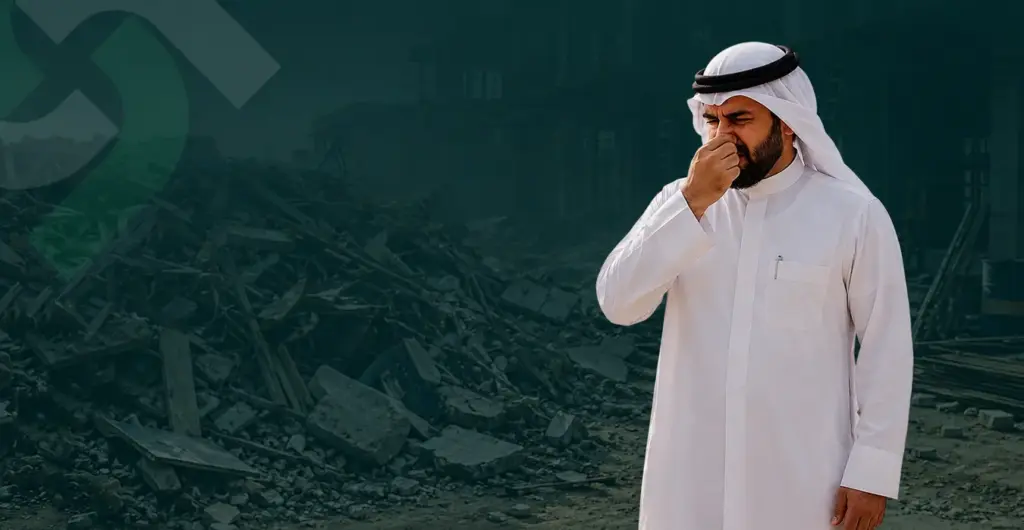
The appearance of an unusual odor around an industrial or commercial facility...
Sorry, this entry is only available in العربية.

Life Cycle Assessment (LCA) is an advanced scientific tool used to evaluate...