Sunday April 13th, 2025
How Do Environmental Impact Assessments Protect the Future of Projects?
Environmental Impact Assessment (EIA) studies are fundamental tools to ensure the sustainability...


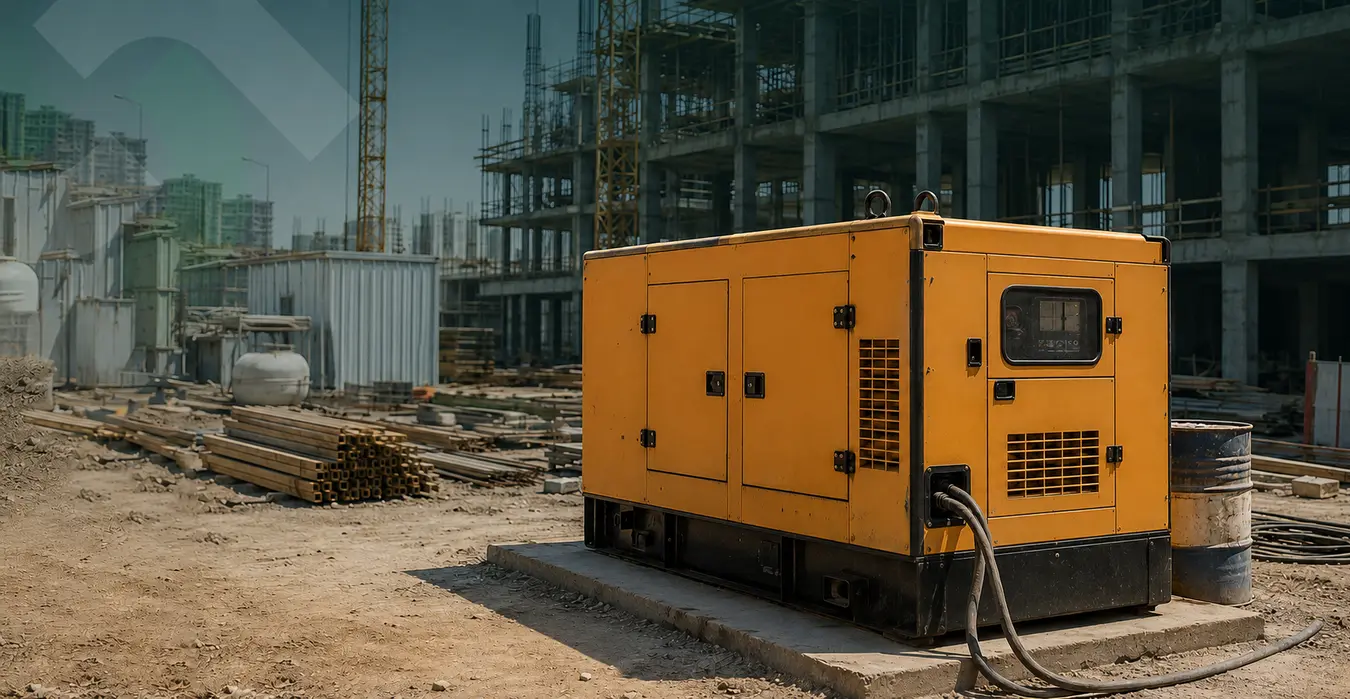
An assessment of the impact of temporary generators on neighboring areas in Kuwait helps determine whether the generator’s location and operating method may cause noise, vibration, or exhaust emissions that affect nearby buildings, workers, or users. The solution is not limited to moving the generator a few meters away; it also includes location selection, exhaust direction, operating hours, acoustic barriers, maintenance, complaint monitoring, and measurements where necessary.
In construction, maintenance, and renovation projects, a temporary generator may be necessary to provide power. However, “temporary” does not mean that its environmental or operational impact can be ignored. A generator operating for long hours near an occupied building may become a recurring source of disturbance even if it is only used for a few weeks.
The assessment helps identify potential nuisance and emissions before operation begins, select a location that reduces the transmission of noise and exhaust to nearby buildings and areas, and establish clear procedures for operation, maintenance, and complaint response.
The assessment becomes particularly important when the generator is close to residences, offices, hotels, healthcare facilities, building entrances, or areas used by the public. It is also useful for projects requiring night-time or extended operation or using more than one generator simultaneously.
There is no single spatial rule that suits every case. The appropriate distance and control method are influenced by generator capacity, operating hours, site design, exhaust direction, surrounding conditions, and applicable regulatory requirements.
A project may need environmental consultancy when generators operate close to occupied buildings, when noise or exhaust-odor complaints recur, when monitoring procedures are unclear, or when extended or night-time operation is required.
Consultancy may also be appropriate when establishing a new project, expanding an existing facility, relocating a generator, increasing the number of units, or reviewing environmental compliance and the Health, Safety and Environment Plan.
The quality of environmental consultancy depends on understanding the nature of the activity and its regulatory requirements. Environmental requirements vary according to the sector, project size, and location. Therefore, the scope of work should be determined after reviewing site details, equipment, operating periods, and the regulatory authorities associated with the project.
It is a structured review of the installation and operation of temporary generators to identify potential effects on the surrounding environment, workers, and nearby users.
The assessment usually covers several areas:
The objective is not merely to identify the existence of a noise or exhaust source, but to understand who may be affected, when they may be affected, through what pathway, and what practical measure can best reduce the impact.
A generator is often viewed simply as another piece of project equipment, similar to a crane or compressor. However, its operating characteristics are different because it may run continuously for hours, sometimes throughout an entire shift or during the night.
Problems usually arise through four main pathways.
Continuous Noise
Noise from the engine, fan, and exhaust can become a recurring nuisance, particularly when the generator operates near occupied building façades or during rest periods.
Vibration
Vibration may be transmitted through the generator base or the surface on which it is installed, potentially causing disturbance inside a nearby building even when the external noise level does not appear unusually high.
Exhaust Emissions
Generator engines produce combustion emissions. The issue may become more noticeable when the exhaust outlet is close to a building, gathering area, or movement route, or when wind direction carries the exhaust toward nearby receptors.
Operation and Poor Maintenance
A generator operating in poor condition may produce unusual smoke, stronger odors, or additional mechanical noise. This makes maintenance part of environmental management rather than merely a technical equipment requirement.
The Kuwait Environment Public Authority indicates that air-quality monitoring responsibilities include noise and ambient air monitoring, complaint investigation, and ensuring compliance with applicable limits and standards in the relevant executive regulations. Emission monitoring also includes stationary and mobile sources and the review of their records and reports.
When Establishing a New Project
Generator locations should preferably be identified during site planning rather than selecting whatever space remains after offices, storage areas, and equipment routes have already been allocated.
Early selection allows the project to review:
When Expanding an Existing Facility
A new section may be constructed while the original facility remains operational. In this case, the generator’s effect on employees, customers, and existing operations should be assessed, not only its effect on the construction workforce.
When Developing an Industrial Site
Multiple existing noise and emission sources may already be present. Therefore, the generator should be considered within the overall operating environment rather than assuming its impact is separate from other equipment.
When Relocating a Generator
The same generator may be acceptable in one location and problematic in another. Proximity to a building, changes in exhaust direction, or different operating hours can alter its level of impact.
When Increasing the Number of Generators
Operating two or more units side by side may increase nuisance levels and the overall environmental load, requiring a reassessment of barriers, distribution, and operating hours.
When Reviewing Environmental Compliance
Project management may need to confirm that actual operations comply with the HSE Plan, Environmental Management Plan, project requirements, and relevant environmental conditions.
When Improving Performance and Sustainability
The assessment may reveal that a generator larger than required is operating at low loads for long periods, or that smaller units could be distributed or managed more efficiently depending on the project’s technical requirements.
Location selection is the first and most important preventive measure.
Before choosing the generator location, identify what surrounds it:
Then ask: If the generator is installed here, where will the noise and exhaust travel?
Do Not Rely on Distance Alone
Increasing distance generally helps reduce impact, but it is not the only factor.
A generator that is slightly farther away but has its exhaust directed toward a ventilation intake may be more problematic than a closer generator whose exhaust is appropriately directed away.
Therefore, location assessment should combine:
Distance + Exhaust Direction + Barriers + Operating Hours + Wind Direction + Building Characteristics.
Review Roofs and Confined Spaces
A generator should not be placed in a location where exhaust can accumulate or re-enter work areas or buildings.
Similarly, placing a generator between high walls may alter the way sound and exhaust disperse. The actual location should therefore be assessed rather than assuming that surrounding walls always provide better protection.
Review Maintenance and Refueling Access
An environmentally suitable location must also be practical. The team needs sufficient space for access, maintenance, refueling, and safe management of any spill without obstructing exits or emergency routes.
Where a generator can be moved farther away from sensitive areas without compromising safe operation, this option should be assessed first.
Generators designed with acoustic enclosures may offer a significant improvement compared with open units, provided that the enclosure remains intact and has not been modified in a way that reduces its effectiveness.
A barrier may reduce sound transmission when its height and location are properly selected.
However, an incorrectly designed barrier may:
Manufacturer requirements, safety, and ventilation therefore need to be considered alongside the acoustic objective.
Suitable vibration-isolation mounts or bases may be used according to the equipment and installation conditions, while ensuring that the support is stable and does not transmit vibration to nearby structures.
If night-time operation is unnecessary, changing the operating schedule may be one of the most effective measures for reducing disturbance to neighboring areas.
If night operation is required, monitoring should be increased and the need for additional controls assessed.
Damage to the fan, engine components, exhaust system, or enclosure may increase noise above the normal operating condition.
A documented maintenance schedule helps distinguish between normal generator noise and an abnormal condition requiring intervention.
Noise cannot always be evaluated by hearing alone. Some cases may require measurements at points representative of neighboring areas or project boundaries, particularly when complaints occur, operation is prolonged, or sensitive receptors are present.
The Kuwait Environment Public Authority refers to monitoring noise data, reviewing reports, investigating complaints, and applying the standards and limits contained in the executive regulations of the Environmental Protection Law.
Check the Exhaust Pipe Direction
Avoid directing exhaust toward:
Monitor Wind Direction
An exhaust direction that is acceptable under normal conditions may become problematic when the wind changes.
It is therefore useful to record:
Monitor Visible Smoke
Unusual visible smoke should trigger a technical inspection and should not automatically be treated as normal merely because the generator operates on diesel.
It may be related to maintenance, engine condition, load, or fuel, and the cause should be assessed by qualified personnel.
Maintain Preventive Maintenance
A maintenance program helps improve combustion conditions and reduce faults that may increase smoke, odors, or noise.
Depending on the project system, the generator log should include:
Avoid Unnecessary Operation
Operating a generator during periods when there is no actual electrical demand increases fuel use, emissions, and noise without providing an operational benefit.
The operating schedule can be reviewed to determine whether shutdown during certain periods is technically and operationally possible.
One common mistake is solving one problem in a way that worsens another.
For example, a generator may be enclosed too tightly to reduce noise, resulting in inadequate ventilation or altered exhaust dispersion.
Similarly, an exhaust pipe may be extended or modified without assessing how the change affects generator performance and manufacturer requirements.
The design should therefore integrate:
This demonstrates the importance of integrating environmental management with health and safety in one practical plan.
The generator should not appear in the Health, Safety and Environment Plan only under a general heading such as “site equipment.”
The plan may address:
Environmental Risks
Health and Safety Risks
Control Measures
SSG explains that HSE Plans include identifying and assessing occupational and environmental risks, developing preventive measures, organizing emergency response, training and awareness, and establishing monitoring and documentation systems.
| Inspection Item | What Should Be Reviewed? | Action if an Observation Exists |
|---|---|---|
| Generator location | No surrounding changes that increase impact | Reassess location |
| Exhaust | Direction, condition, and absence of unusual smoke | Technical inspection and corrective action |
| Noise | No noticeable abnormal change or complaint | Inspect and measure if required |
| Vibration | Unit and foundation remain stable | Review isolation and fixing |
| Operating hours | Consistent with schedule and actual need | Reduce unnecessary operation |
| Acoustic enclosure | Closed, intact, and unmodified | Repair defects |
| Ventilation | No blockage or abnormal overheating | Review location or barrier |
| Fuel | No leaks or stains | Contain and address the condition |
| Surrounding area | Clean and safe | Clean and correct |
| Complaints | No open complaint | Investigate and document |
| Maintenance | Record is up to date | Schedule the required action |
Record the Complaint
Document:
Inspect From the Receptor Location
Standing next to the generator is not enough.
The problem should be assessed from the location where the complaint originated, or a point that represents it as closely as possible.
Review Operating Conditions
Ask:
Implement an Initial Action
This may include:
Verify Closure
Do not consider the case closed simply because an action was implemented.
Return to the complaint location and verify the result, then record what was found.
First review:
Then implement the appropriate action after identifying the cause.
The issue may be related to the generator itself, its location, changing weather conditions, or a door, window, or ventilation opening that has become active during a new project phase.
Therefore, the solution should not simply be reduced to “move the generator” without a practical assessment.
Increased Neighbor Complaints
Repeated noise or odors may affect the relationship between the project and neighboring buildings even when generator operation is temporary.
Project Delays
Management may have to relocate equipment or urgently redesign arrangements if the generator location was not assessed in advance.
Increased Operational Risks
Improvised modifications to barriers or exhaust arrangements intended to solve a complaint quickly may create ventilation or safety problems.
Difficulty Demonstrating Compliance
Without operating, maintenance, complaint, and monitoring records, reviewing the project’s environmental performance becomes more difficult.
Higher Corrective Costs
Relocating a generator after electrical connections, barriers, and fuel arrangements have already been installed may cost more than selecting an appropriate location at the beginning.
Unmanaged Environmental Impacts
Noise, exhaust, and fuel spills may be managed as separate issues even though they originate from the same source and require one coordinated monitoring system.
Selecting the Location Only Because It Is Close to the Electrical Panel
Technical efficiency matters, but nearby buildings, neighboring areas, exhaust, noise, and safety must also be reviewed.
Assuming Temporary Operation Does Not Require Assessment
A temporary generator may operate for many hours per day and continue for several months of the project.
Directing Exhaust Away From the Site but Toward the Neighbor
The objective is not only to remove exhaust from worker areas; the project must also understand where it will travel afterward.
Installing an Acoustic Barrier Without Assessing Ventilation
A noise-control solution may create an operating problem if it blocks generator cooling.
Ignoring Vibration
Users of a nearby building may feel vibration even when external noise does not appear particularly high.
Relying Only on Breakdown Maintenance
Preventive maintenance helps detect changes in noise and exhaust before they develop into complaints.
Failing to Record Operating Hours
It becomes difficult to analyze complaints if the team does not know which generator was operating and for how long.
Closing Complaints Without Verification
The result should be evaluated after the action rather than simply proving that the team made a modification.
| Project Situation | Appropriate Service | Practical Objective |
|---|---|---|
| New construction project | HSE Plan preparation | Identify generator risks and controls before operation |
| Generator near an occupied building | Field environmental assessment | Review noise, exhaust, and location |
| Repeated noise complaint | Noise-source review and measurement | Identify the cause of nuisance and corrective action |
| Exhaust complaint | Location and operational emissions assessment | Review exhaust direction and generator condition |
| Several temporary generators | Environmental supervision | Monitor operation and cumulative impact |
| Expansion of an existing facility | HSE review | Protect workers and neighboring areas during construction |
| Night-time operation | Specialized environmental monitoring | Reduce impact during sensitive periods |
| Industrial site | Emissions and noise review | Integrate the generator with other site sources |
| Fuel spills | HSE assessment and response procedures | Improve containment and handling |
| High complaint record | Corrective-action audit | Identify recurring causes and prevent recurrence |
Experience in Projects and Operating Sites
The consultant should understand that the generator is part of a wider site system that includes construction activities, offices, contractors, equipment, and neighboring areas that may change as the project progresses.
Understanding Kuwaiti Requirements
Applicable environmental requirements and regulations in Kuwait relating to air, noise, environmental management, and safety should be reviewed according to the nature of the project.
The Kuwait Environment Public Authority publishes separate executive regulations covering ambient air protection, environmental management, air quality, noise in indoor environments, worker safety, and other relevant environmental areas.
Ability to Conduct Measurement and Assessment
The existence of a complaint does not always mean that the source is already known.
An environmental consultancy company in Kuwait should be able to identify suitable inspection and measurement points when needed and relate the results to actual operating conditions.
Clear Methodology
The scope of work should clarify:
Practical and Applicable Solutions
Not every project can move a generator a large distance away.
The solution may require a combination of location adjustment, barriers, operating hours, maintenance, and performance monitoring.
Understanding the Integration Between Environment and Safety
Changes to exhaust systems, barriers, or fuel areas should not solve an environmental issue while creating a new risk for workers.
SSG support can begin by reviewing the project location, generator positions, operating periods, and the nature of neighboring areas before defining the appropriate scope of service.
Support may include:
SSG’s Environmental Supervision for Construction and Development Projects service includes field monitoring of activities, measurements of noise, air quality, wind speed, and other environmental monitoring parameters, in addition to inspections and reporting.
SSG’s HSE Plan Preparation service also helps organize risk assessment, preventive measures, emergency response, training, monitoring, and documentation so that the generator is managed as part of the overall project system rather than as an isolated piece of equipment.
Explain the issue or project stage: a new generator, noise complaint, exhaust odor, night-time operation, or a need to update the HSE Plan.
You may provide:
The relationship between the generator, neighboring areas, operating conditions, and project phases is analyzed.
The project may require:
The location, equipment, potential receptors, and project records are reviewed.
Actions are prioritized according to urgency, feasibility, and expected level of impact.
A follow-up review can confirm whether the modification resulted in actual improvement and did not create a new operational problem.
What Are the Most Important Factors When Assessing the Impact of Temporary Generators on Neighboring Areas in Kuwait?
The main factors include generator location, distance from buildings, exhaust direction, air-intake openings, generator capacity, operating hours, noise and vibration, wind direction, and maintenance condition.
The nature of neighboring areas should also be reviewed. Residences, offices, or sensitive facilities may require more detailed monitoring than an industrial site located relatively far from receptors.
Is There One Safe Distance Between a Generator and a Building?
It is not preferable to use one general distance for all projects without assessing the specific situation.
The appropriate distance depends on generator design, exhaust outlet, ventilation, capacity, noise level, building characteristics, air intakes, barriers, and applicable requirements.
The location should therefore be evaluated as a complete system rather than relying on distance alone as evidence that the impact is acceptable.
How Can Temporary Generator Noise Be Reduced?
Start by increasing separation from sensitive areas, using a generator fitted with a suitable acoustic enclosure, installing properly designed barriers, using vibration isolators, carrying out maintenance, and reducing unnecessary operation.
Operating hours may also be adjusted where project requirements allow.
If complaints continue, noise measurements may be required at points representative of the affected area so that the source can be assessed more accurately.
How Can Generator Exhaust Be Prevented From Affecting a Building?
The process starts with location selection and reviewing the exhaust pipe direction in relation to doors, windows, air-intake openings, and gathering areas, while also considering wind movement.
Maintenance should be kept up to date and unusual smoke should be investigated.
Random modifications to the exhaust system are not recommended because manufacturer requirements, safety, and generator technical performance must be considered alongside environmental objectives.
Does a Temporary Generator Always Require Noise or Emissions Measurements?
Not necessarily.
The required level of monitoring depends on generator capacity, location, operating duration, nature of neighboring areas, environmental and contractual requirements, and whether complaints or signs of impact exist.
Site inspection and records may be sufficient in some cases, while others may require specialized measurements.
This should be determined after reviewing project details and applicable requirements.
Should Generators Be Included in the HSE Plan?
Yes. When generators form part of project activities, the HSE Plan should address their relevant risks, including electricity, fuel, fire, maintenance, noise, exhaust, and spills.
Inspection procedures, responsibilities, emergency arrangements, training, and documentation should also be defined.
The level of detail depends on the number of units, project size, operating duration, and site-related risks.
What Should a Project Do When a Complaint Is Received From a Neighbor?
The project should record the time, location, and nature of the complaint, then review which generators were operating, weather conditions, exhaust direction, and equipment condition.
After identifying the likely cause, an appropriate measure should be implemented, such as maintenance, modifying operations, adjusting the barrier, or changing the location.
The result should then be verified from a point representing the affected area.
The important objective is to close the underlying cause, not simply record that the complaint was “handled.”
When Does an Assessment of the Impact of Temporary Generators on Neighboring Areas in Kuwait Require Specialized Consultancy?
Specialized consultancy can be useful when a generator is close to an occupied building, when night-time operation is required, when repeated noise or exhaust complaints occur, when several generators are operating, or when the true source of the problem is difficult to determine.
It is also useful before selecting a generator location in a new project because adjusting the arrangement at an early stage is usually more practical than redesigning it after operation begins.
If you are planning to install temporary generators near buildings or need an assessment of the impact of temporary generators on neighboring areas in Kuwait after noise or exhaust complaints have appeared, you can contact SSG for an initial assessment of your project requirements.
The initial assessment can help determine whether the project requires a review of the generator location, noise or air-quality measurements, improvements to operating and maintenance procedures, an HSE Plan update, or more comprehensive field environmental supervision.

Environmental Impact Assessment (EIA) studies are fundamental tools to ensure the sustainability...
Sorry, this entry is only available in العربية.

What is a worker environmental awareness programme? It is a structured system...